
Contents
More on Brain
MitoMIND Review: Presets, Sessions, and Who It Suits
A close look at the MitoMIND Helmet: how 256 LEDs deliver 810 nm near infrared light across the scalp, the six presets, how often to use it, what the research does and does not say, and how it compares with the other brain light devices at Kove.

The MitoMIND Helmet is a near infrared light helmet. Inside the white shell, 256 LEDs deliver 810 nm light across the scalp while you sit, read, or meditate, and a separate controller runs six preset programs or a custom session. A bundle adds a 1070 nm intranasal unit. This review covers how it works, what a session is like, how often to use it, what the research says, how it compares with other brain light devices at Kove, and who should choose something else.
The MitoMIND at a glance
| Spec | MitoMIND Helmet |
|---|---|
| Type | Hands-free near infrared helmet with a separate controller |
| LEDs | 256 |
| Wavelength | 810 nm near infrared; optional 1070 nm intranasal unit in the bundle |
| Irradiance | 14 mW/cm² (lab spectroradiometer); 28 mW/cm² (solar meter) |
| Power | 15 W output; 4 levels: 25, 50, 75, 100% |
| Pulse rate | Adjustable, 1 to 20,000 Hz |
| Programs | 6 presets: Recharge, Sleep, Meditate, Relax, Concentrate, Peak Focus, plus custom time, pulse, and power |
| Session | 1 to 30 minutes; presets run 6 to 15 minutes |
| Electronics | Battery DC with no magnetic field, no Bluetooth or WiFi, zero flicker |
| Certifications | FDA Class II registered, BSCI, ISO 9001/14001 |
| Warranty | 2-year warranty |
How the MitoMIND works
The helmet uses transcranial photobiomodulation: near infrared light aimed at the head from outside. At 810 nm, light passes through skin and skull further than visible red light; the bone weakens it but does not block it. The proposed mechanism is the one behind all red light work: an enzyme in the mitochondria, cytochrome c oxidase, absorbs light in this range, and cells appear to produce energy more efficiently for a while afterward. Our guide to what the red light evidence says covers it in more depth.
Two things set the MitoMIND apart. Coverage: 256 LEDs spread around the shell, so the light reaches the whole scalp at once, not just a few spots. Control: you can pulse the light from 1 to 20,000 Hz at four power levels, and the presets borrow familiar brainwave numbers, such as 10 Hz for Relax and 40 Hz for Peak Focus. Whether pulsing changes the effect is still an open research question, so read the presets as starting points, not proven settings.
Mito publishes two irradiance numbers, 14 mW/cm² on a lab spectroradiometer and 28 on a solar meter. The lower lab reading is the one to compare, and it marks the MitoMIND as a gentle, even source. Our guide to reading red light specs explains why the instruments disagree and why you should only compare devices measured the same way.
What a session is like
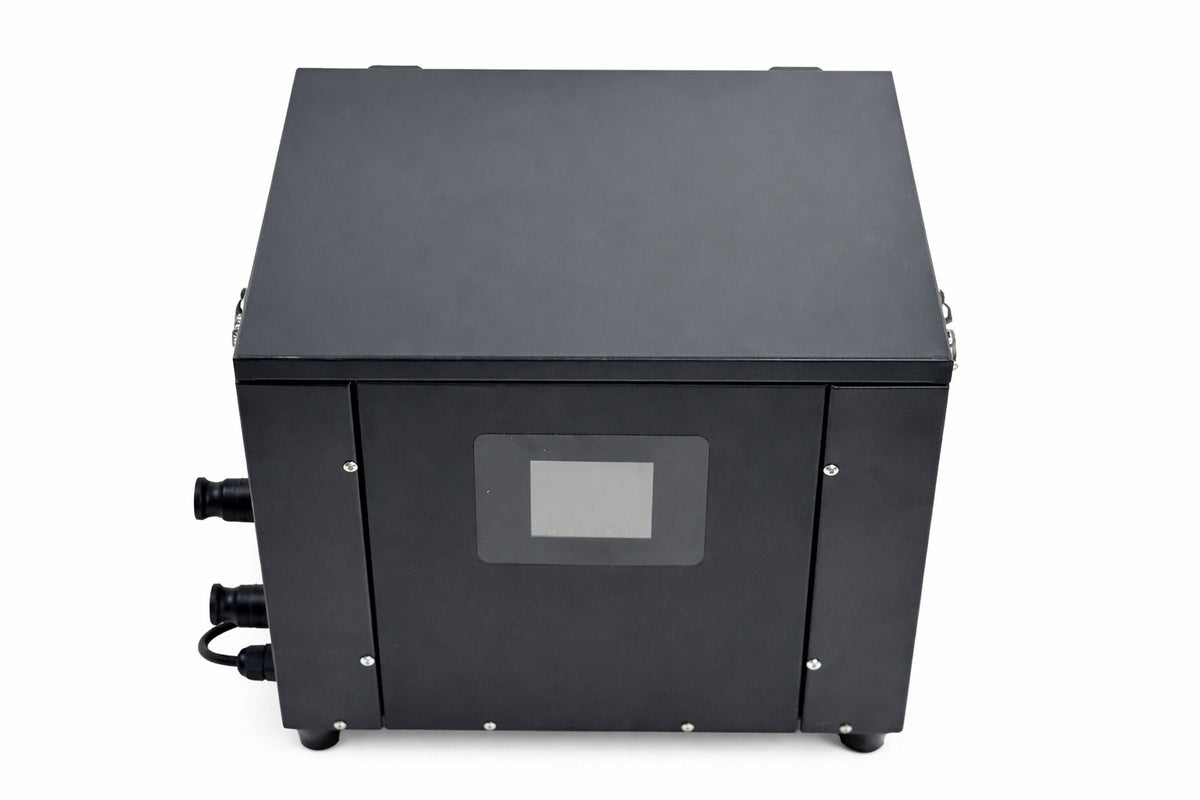
Put the helmet on with the LEDs facing your scalp, pick a program on the controller, and sit back. Most people read or meditate, and the helmet shuts off when the timer ends. Near infrared light is mostly invisible, so there is little to see or feel. Mito suggests Recharge or Relax as a first program. The default presets are:
- Recharge: 0 Hz (steady light), 100% power, 10 minutes.
- Sleep: 2 Hz, 50% power, 15 minutes.
- Meditate: 5 Hz, 50% power, 15 minutes.
- Relax: 10 Hz, 75% power, 15 minutes.
- Concentrate: 16 Hz, 75% power, 12 minutes.
- Peak Focus: 40 Hz, 100% power, 6 minutes.
The custom setting lets you choose time, pulse rate, and power yourself, up to 30 minutes. The helmet runs on battery power, so top it up between sessions.
How often to use it
Mito recommends daily use. Sleep is meant for 30 to 60 minutes before bed, and Concentrate and Peak Focus for before or during focused work. Attach a session to something you already do every day, such as morning reading or the last hour before bed. Short and regular beats long and occasional.
What the research says
Transcranial photobiomodulation is a young research field. Small controlled studies have measured changes in brain blood flow, EEG activity, and performance on thinking tasks after near infrared light to the head, and 810 nm is one of the most studied wavelengths. Most of that work is small, short, and used other device designs, so it describes the approach, not this helmet. In short: the mechanism is plausible, the early data is interesting, and it is not settled science. The MitoMIND is a wellness device, not a treatment. It does not diagnose, treat, or prevent any condition. Our brain, light, and sound guide covers the category. Kove does not provide medical advice; see the medical disclaimer.
Safety and comfort
The helmet is non invasive and gentle by design: low irradiance, an adjustable, ergonomic fit, and no wireless transmitters. Do not use it directly over the eyes. Mito advises checking with a doctor first if you are pregnant, take medication that makes you sensitive to light, have a history of seizures, have an implanted electronic device in or near the head, or have active cancer or a neurological condition under a doctor's care. Children should use it only with adult supervision. Skip the intranasal unit during a nasal infection, after recent nasal surgery, or with a significant nasal blockage.
MitoMIND, Vielight, Neuronic, or NeuroVIZR?
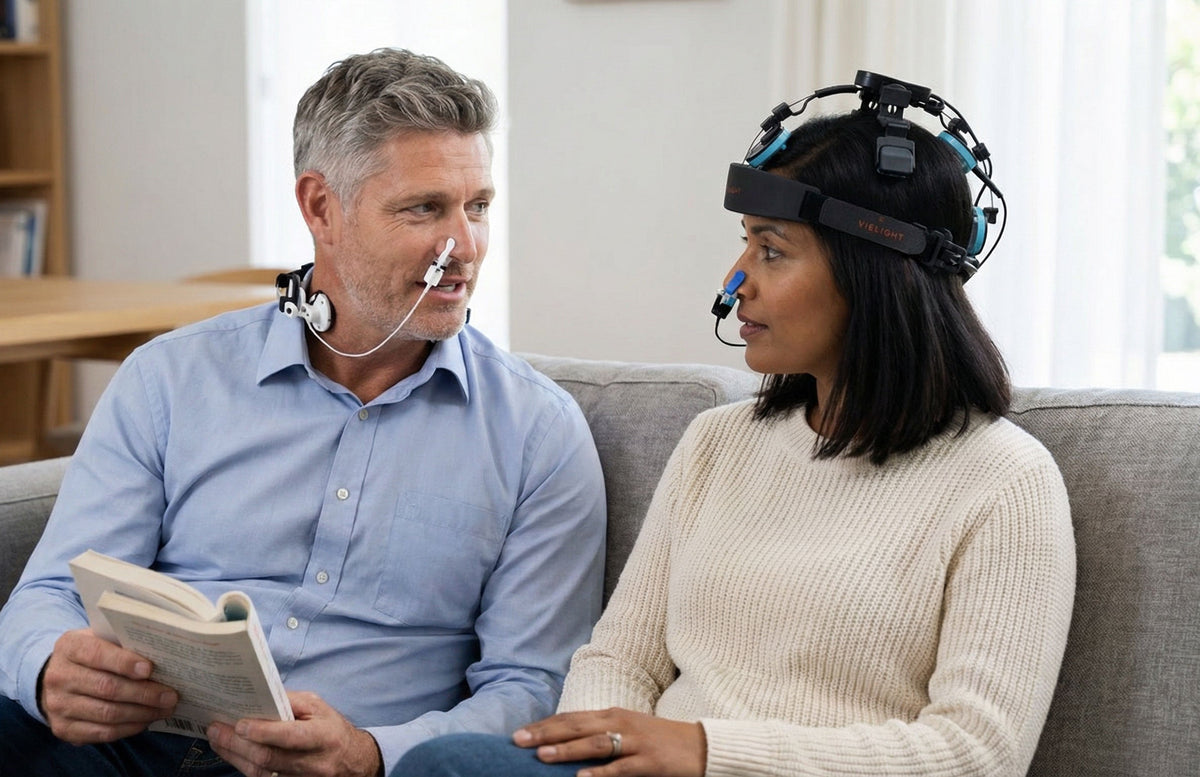
- Vielight Neuro Duo 4 also uses 810 nm, from four scalp modules plus an included intranasal applicator, pulsed at 10 Hz or 40 Hz for 20 minutes. List price $2,399. Choose it for a design with its own published studies, covered in Vielight Neuro research. Choose the MitoMIND for whole-scalp coverage, six presets, and full control over pulse and power.
- Neuronic LIGHT uses a longer 1070 nm wavelength from 300 LEDs across the whole head, with presets of 3 to 10 minutes and control from an app or one button. List price $1,695. Choose it for the longer wavelength in the helmet itself. Choose the MitoMIND for 810 nm, the option of a 1070 nm intranasal unit, and no app at all.
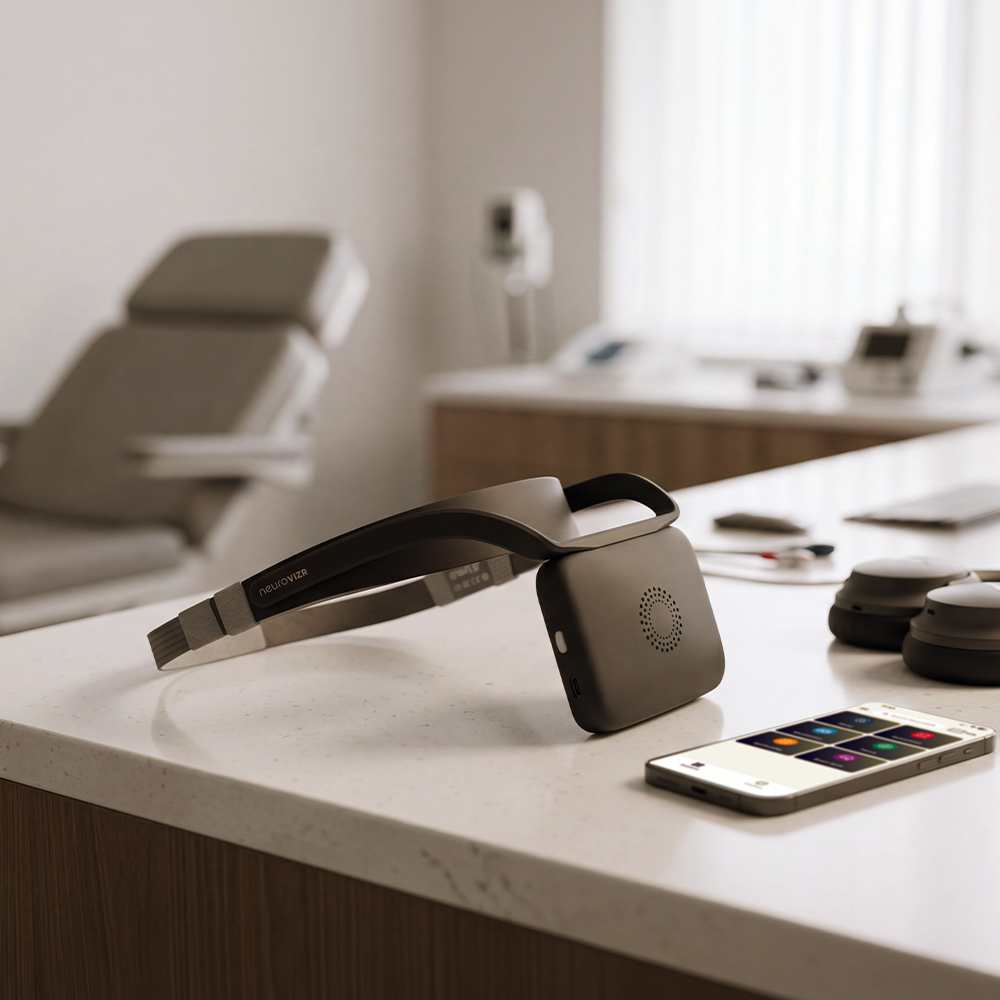
- NeuroVIZR Original is a different kind of device: white light and sound through closed eyelids for about 11 minutes, aimed at a relaxed or focused state. List price $599. Choose it for a vivid, guided session in the evening; choose the MitoMIND for quiet light you can read under.
The Brain & Light collection shows more brain devices side by side.
Who the MitoMIND suits, and who should skip it
- Suits you if you already have a daily habit, such as meditation or reading, that a session can attach to.
- Suits you if you want whole-scalp coverage, presets for different times of day, and the freedom to set your own.
- Skip it if you want a device whose own design has been tested in published studies; the Vielight Neuro line fits better.
- Skip it if you want an eyes-closed light and sound experience; the NeuroVIZR Original does that for far less.
- Skip it if you want something to use now and then; it is built for daily use.
Can you pay with HSA or FSA?
The MitoMIND can qualify with a Letter of Medical Necessity, decided per order by an independent licensed provider through Truemed at checkout. Details on the HSA and FSA page.
Frequently asked questions
Is the MitoMIND worth it?
If you want a hands-free, whole-scalp near infrared helmet with presets for focus, relaxation, and sleep, and you will use it most days, yes. If you want published studies on the device's own design, look at the Vielight Neuro line.
Does the MitoMIND work?
It delivers 810 nm near infrared light evenly across the scalp at the program you choose. Research on near infrared light for the brain is early, mostly small studies with other devices, and results depend on consistent use. It is a wellness device, not a treatment.
How much does the MitoMIND cost?
The helmet has a list price of $2,995 and is on sale at Kove for $2,199 as of October 2026. The bundle with the 1070 nm intranasal unit is $2,349. Prices can change, and the product page is the source of truth.
How long is a MitoMIND session?
The presets run 6 to 15 minutes. A custom session can run up to 30 minutes, and the helmet shuts off when the timer ends.
What does the 1070 nm intranasal unit add?
A soft tip placed in one or both nostrils delivers 1070 nm near infrared light, with the helmet or on its own. It comes only in the bundle, and Mito says it cannot be bought separately later, so decide at purchase.
What warranty does the MitoMIND have?
A 2-year warranty.
Can I buy the MitoMIND now?
It is sold out right now. The product page lets you sign up to be told when it is back.
The short version
The MitoMIND is a gentle, hands-free 810 nm helmet with 256 LEDs, six presets, and full control over pulse, power, and time. It suits anyone who wants a daily, whole-scalp light routine to pair with reading, meditation, or the hour before bed. It is sold out right now, so visit the MitoMIND Helmet page to be notified when it returns. When it does, it ships free in the US with the Price Beat guarantee, and our team can help you choose a brain light device.