
Contents
More on Brain
Vielight Neuro Duo 4 Review: Modes, Sessions, Who It Suits
An honest look at the Vielight Neuro Duo 4: how its 810 nm transcranial and intranasal light works, what a 20 minute session is like, how often to use it, what the research does and does not say, and whether the Duo or a single mode Neuro fits you better.
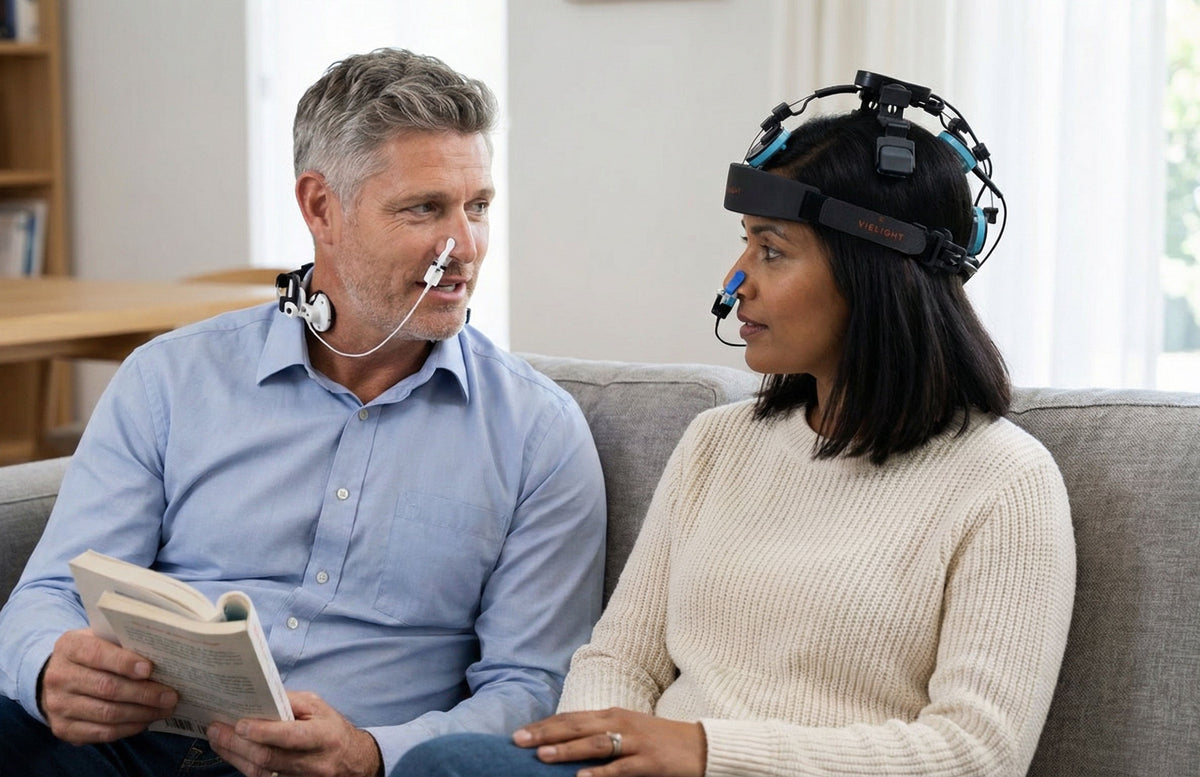
The Vielight Neuro Duo 4 is a headset that sends pulsed 810 nm near infrared light to the brain from five small modules: four that rest against the scalp and one that sits just inside the nostril. It puts both Neuro pulse modes in a single device, Alpha at 10 Hz and Gamma at 40 Hz, and each session runs 20 minutes. This review covers how it works, sessions, the research, how it compares, and who should choose something else.
The Vielight Neuro Duo 4 at a glance
| Spec | Neuro Duo 4 |
|---|---|
| Type | Transcranial and intranasal photobiomodulation headset |
| Wavelength | 810 nm near infrared, all five modules |
| Pulse modes | Alpha 10 Hz and Gamma 40 Hz, switchable per session |
| Modules | 5 Vie-LED modules: 3 rear and 1 frontal on the scalp, 1 intranasal |
| Power density | 100 to 150 mW/cm² rear, 75 to 125 mW/cm² frontal, 25 to 50 mW/cm² intranasal |
| Coverage | About 400 cm², including the intranasal module |
| Session | 20 minutes, timer controlled |
| Suitable for | Ages 5 and up, per Vielight |
| In the box | Headset, intranasal applicator, charger, pouch, case |
| Certifications | ISO 13485 and MDSAP manufacturing, TÜV Rheinland safety |
| Warranty | 2-year warranty from the date of delivery |
How the Neuro Duo 4 works
The Neuro uses 810 nm because that wavelength passes through skin and bone further than visible light does. Four modules sit on the head, three at the back and one at the front, and their concave lenses part the hair so the light reaches the scalp. The fifth is an intranasal applicator that shines light up through the nasal channel, reaching the brain from below.
The light pulses rather than staying on, at 10 Hz (Alpha) or 40 Hz (Gamma), your choice each session. These are hardware settings, the same ones used in the published studies, not a promise that your brain will match them. The proposed mechanism is the one behind light therapy in general: mitochondria absorb the light, supporting normal cellular energy production. The LEDs are engineered to stay cold, so there is no heat on the scalp. Our red light evidence guide covers the wider science.
What a session is like
Charge the headset, fit it snugly so the lenses touch your scalp, place the intranasal applicator in one nostril, choose Alpha or Gamma, and start. It switches itself off after 20 minutes. You can read or sit quietly while it runs. Clean the intranasal applicator between uses, especially if more than one person shares the device.
How often to use it
Vielight suggests starting every other day and building up to six days a week, then daily use, alternating modes: Gamma in the morning or early afternoon for focus and mental energy, Alpha in the evening to relax before bed. With only one slot a day, pick the mode that fits it. The longer published studies ran for 12 weeks.
What the research says
The Neuro's design has been studied in independent, peer reviewed research, more than most home brain devices can point to. The clearest study for a healthy buyer gave 20 healthy adults one 20 minute session at 40 Hz and one sham session, and found measurable changes in brain activity on EEG after the real one. Two smaller studies in older adults, with 8 and 5 participants, followed 12 weeks of use. Those are pilots: small, early, and not proof of results for any one person. Our Vielight Neuro research breakdown walks through each study and what it does and does not show. In short, the Neuro Duo 4 is a general wellness device, not a treatment. It does not diagnose, treat, or prevent any condition. Kove does not provide medical advice; see the medical disclaimer.
Safety and comfort
The Neuro is non invasive and stays cool. Vielight says it should not be used by anyone with active brain bleeds or a history of seizures, and anyone who is pregnant should check with a healthcare provider first. Some users notice mild, temporary headache, dizziness, or discomfort, which generally eases with use. If you manage a medical condition, talk to your clinician first.
Neuro Duo 4, Neuro Alpha 4, or Neuro Gamma 4?
All three share the same hardware, 810 nm light, 20 minute sessions, and 2-year warranty. Only the pulse rate differs.
| Model | Pulse rate | Best for | List price |
|---|---|---|---|
| Neuro Alpha 4 | 10 Hz | Relaxing, often in the evening | $1,799 |
| Neuro Gamma 4 | 40 Hz | Focus, often in the daytime | $1,799 |
| Neuro Duo 4 | 10 Hz and 40 Hz | Both, switchable per session | $2,399 |
The Duo costs $600 more than either single mode model and $1,199 less than buying both. Choose the Alpha or the Gamma if you know which mode you want; choose the Duo if you want both or are not sure yet. The Vielight X-Plus 4 ($449) is a different device, a 633 nm nasal applicator plus an 810 nm body module with no headset, and some people pair it with a Neuro. List prices are as of October 2026; a promotion may be running, and the product page is the source of truth.
How it compares with other brain devices at Kove
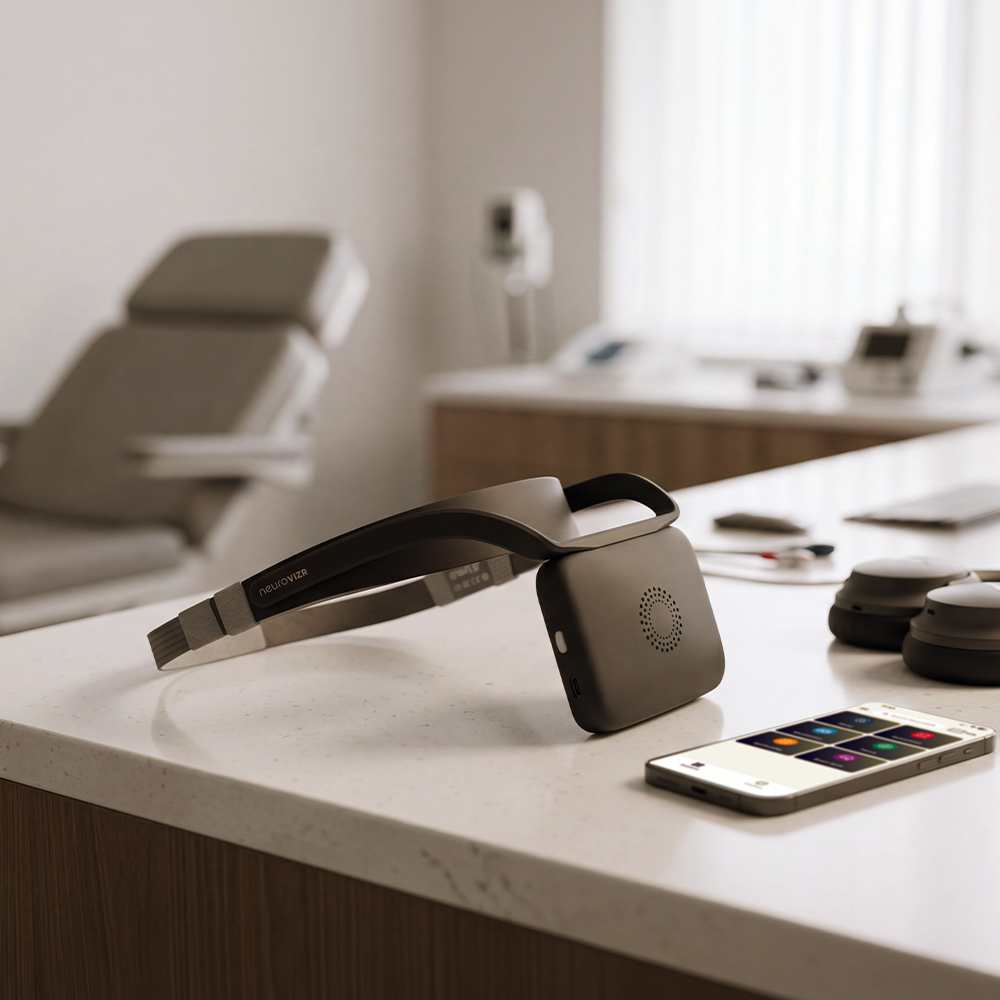
- NeuroVIZR Original ($599). An eyes closed light and sound device: 40 Hz light and sound in guided app sessions of about 11 minutes.
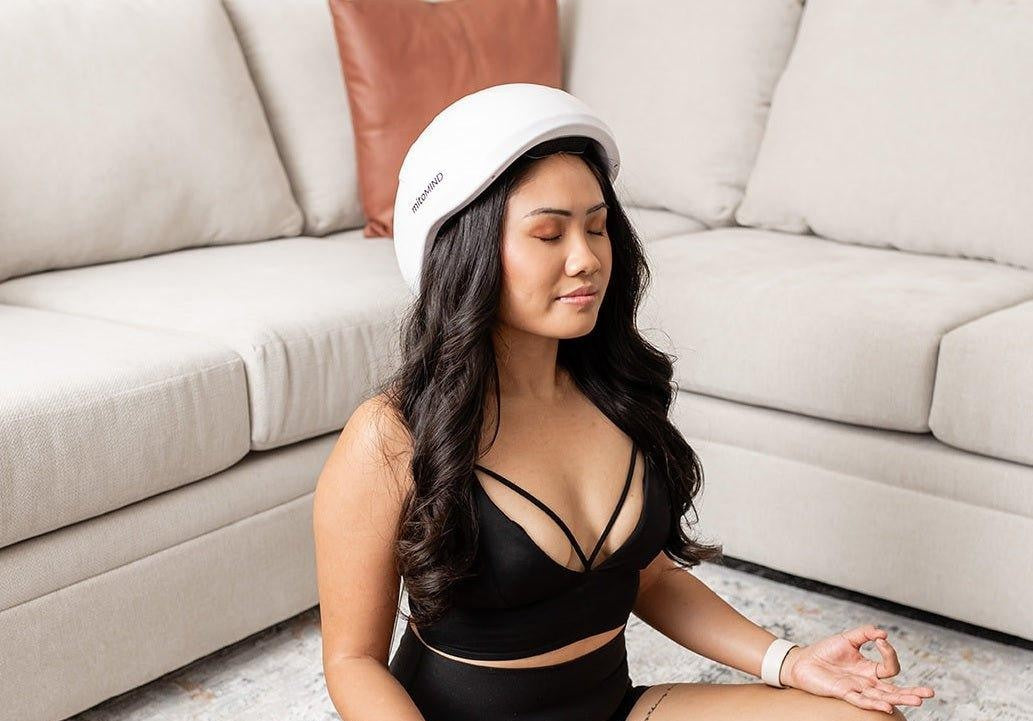
- MitoMIND Helmet (list $2,995). An 810 nm, 256 LED helmet with adjustable pulse rate and power and six preset programs; an intranasal unit comes as a bundle.
- Neuronic LIGHT ($1,695). A 1070 nm, 300 LED helmet covering 670 cm², with app presets that include 10 Hz and 40 Hz.
What sets the Neuro Duo 4 apart is the intranasal module in the box and published research on its own design; the others offer more settings or a different kind of session. The Brain & Light collection shows every option side by side, and our brain, light, and sound guide compares the formats.
Who the Neuro Duo 4 suits, and who should skip it
- Suits you if you want both a calm mode and a focus mode and would rather not pick one.
- Suits you if your day has room for a daytime session and an evening session.
- Skip it if you already know you only want one mode; the Neuro Alpha 4 or Neuro Gamma 4 covers it for $600 less.
- Skip it if you want an eyes closed, guided light and sound session; the NeuroVIZR Original fits better.
- Skip it if you want to set your own pulse rate and intensity; the MitoMIND Helmet and Neuronic LIGHT both let you.
Can you pay with HSA or FSA?
The Neuro Duo 4 can qualify with a Letter of Medical Necessity, decided per order by an independent licensed provider through Truemed at checkout. Details on the HSA and FSA page.
Frequently asked questions
Is the Vielight Neuro Duo 4 worth it?
If you want both pulse modes, yes: it costs $1,199 less than buying the Alpha and the Gamma separately. If you only want one mode, a single mode model is the better buy.
Does the Vielight Neuro Duo 4 work?
It delivers pulsed 810 nm light through the scalp and nasal channel as designed, and a small sham controlled study in healthy adults found EEG changes after one session. It is a wellness device, not a treatment, and results vary from person to person.
How much does the Vielight Neuro Duo 4 cost?
The list price at Kove is $2,399. The Neuro Alpha 4 and Neuro Gamma 4 are $1,799 each.
How long is a Neuro Duo 4 session?
A Neuro Duo 4 session lasts 20 minutes. The headset runs on a timer and switches itself off.
What is the difference between the Neuro Duo 4 and the Neuro Gamma 4?
The hardware is the same. The Gamma 4 runs at 40 Hz only; the Duo 4 runs at 40 Hz or 10 Hz, your choice for each session.
What warranty does the Neuro Duo 4 have?
The Neuro Duo 4 has a 2-year warranty from the date of delivery.
Can I return the Neuro Duo 4?
Yes. You have 60 days from delivery to return it in its original packaging for a full refund, with a prepaid label from our team. After that, Vielight products come with a 6 month guarantee: if it is not for you within six months of purchase, return it for an 80% refund, even after use. See the returns page.
The Neuro Duo 4 verdict
The Vielight Neuro Duo 4 puts both Neuro pulse modes on a single headset: 810 nm light through the scalp and nose, 20 minutes at a time, Gamma by day and Alpha by evening. It suits anyone who wants both modes, or is not sure which one they need. See it on the Neuro Duo 4 page; it ships free in the US with the Price Beat guarantee, and our team can help you choose between the Duo and a single mode model.