
Contents
More on Brain
Vielight Neuro Research: What the Published Studies Show
The peer-reviewed studies behind the Vielight Neuro headsets, explained plainly: who was studied, what was measured, what changed, and what is still unproven.
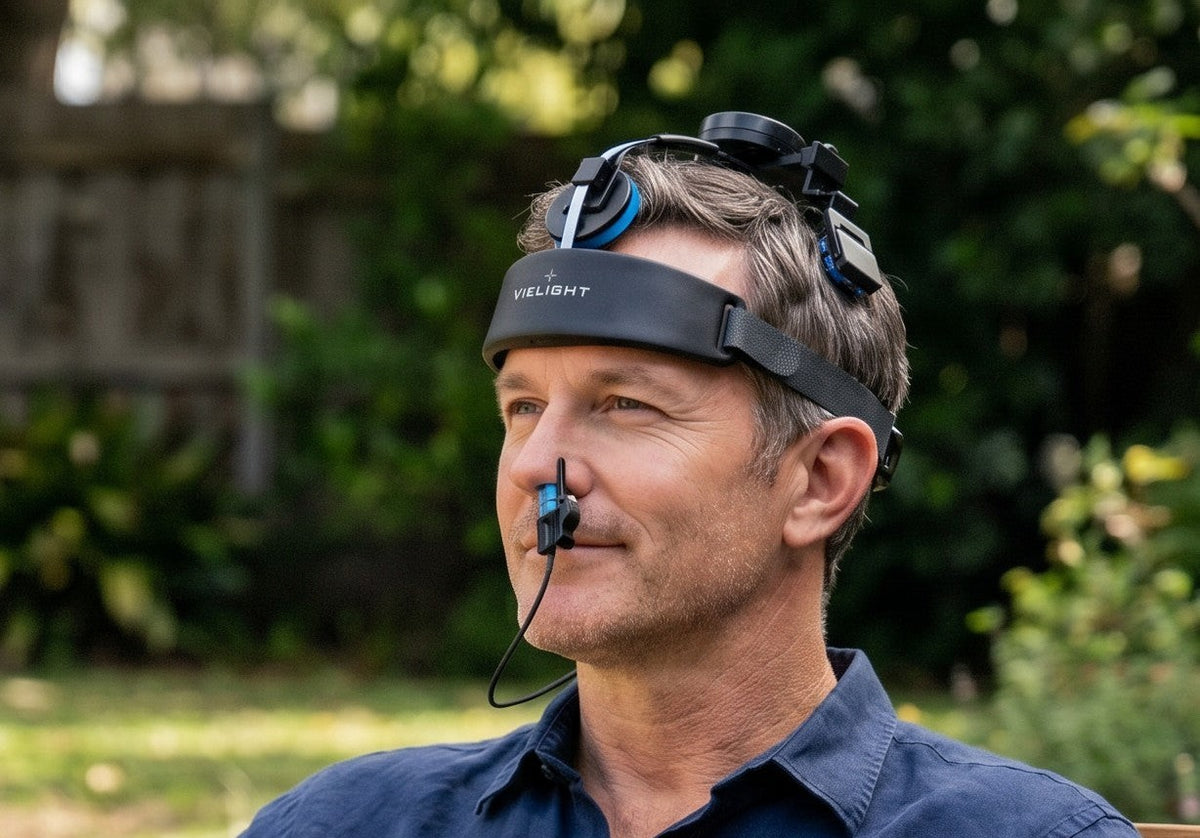
Vielight is unusual among home brain devices in one respect: the technology has been the subject of independent, peer-reviewed research rather than only manufacturer claims. This post walks through the studies that matter, in plain language, so you can judge the evidence for yourself before buying a Neuro Gamma 4, Neuro Alpha 4 or Neuro Duo 4.
One thing to say up front. The Vielight Neuro sold at Kove is a general wellness device. Several of the studies below were run in people with a diagnosed condition, because that is where researchers look first for measurable change. Reading about those studies is not the same as a treatment claim, and we do not make one. The device is not intended to diagnose, treat, cure or prevent any disease. Where the research is early or small, we say so.
How the technology works, in one paragraph
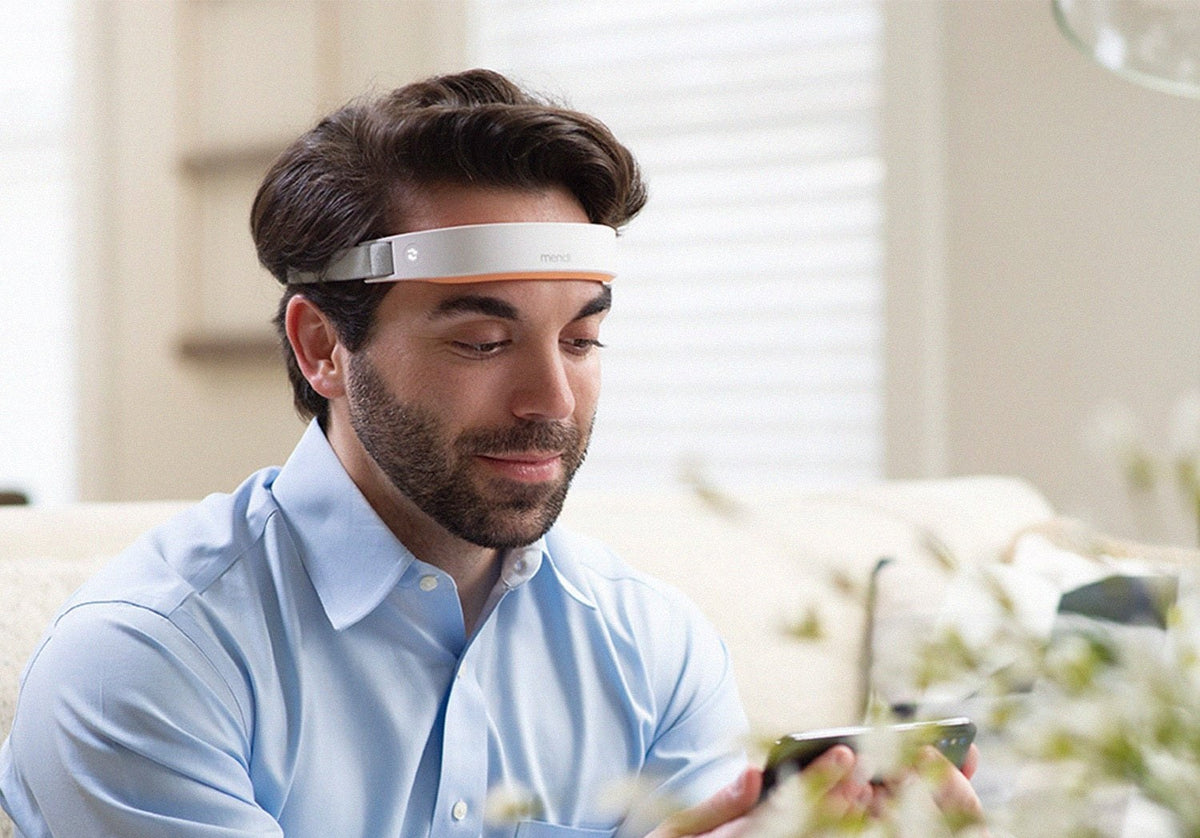
The Neuro delivers 810 nm near infrared light through the scalp from four modules and through the nasal channel from a fifth. The 810 nm wavelength is used because it passes through tissue and bone further than visible light. The light is pulsed rather than continuous, at 10 Hz on the Alpha, 40 Hz on the Gamma, or either on the Duo. The proposed mechanism is the same one described across red light research: absorption by mitochondria, supporting cellular energy production, along with effects on local blood flow. For the wider category, see light and sound brain wellness.
Study 1: a single session changes brain activity on EEG
Zomorrodi and colleagues, Scientific Reports, 2019. 20 healthy adults, sham controlled.
This is the cleanest study for a healthy buyer because it used healthy participants and a sham comparison. Each person had one 20-minute session with 810 nm light pulsed at 40 Hz, the Neuro Gamma setting, aimed at the default mode network, and one sham session, while wearing an EEG cap.
The finding: after the real session, the power of faster brain rhythms (alpha, beta and gamma) rose and the power of slower rhythms (delta and theta) fell, compared with sham. Network analysis also showed changes in how brain regions communicated. The authors describe it as evidence that pulsed light can modulate neural oscillations without any invasive procedure.
What it does not show: that those EEG shifts translate into better focus or memory in daily life. It is a mechanism study, and a good one.
Study 2: twelve weeks of home use, with MRI
Chao, Photobiomodulation, Photomedicine and Laser Surgery, 2019. 8 older adults with a physician diagnosis of dementia, randomized pilot.
Eight participants, average age around 80, were randomized to either usual care or 12 weeks of home sessions with the Neuro Gamma, three times a week, run by a family member or study partner. That home-use design matters: it is how the device is actually used, not a lab protocol.
The finding: the group using the device showed improvements on a standard cognitive assessment (ADAS-cog) and on a behavior scale (NPI), increased cerebral blood flow measured by MRI, and stronger connectivity within the default mode network. The usual-care group did not.
What it does not show: eight people is a pilot. It tells researchers a larger trial is worth running, and it is the reason those larger trials exist.
Study 3: the first case series
Saltmarche and colleagues, Photomedicine and Laser Surgery, 2017. 5 older adults with mild to moderately severe cognitive impairment.
This was the first published report of the transcranial plus intranasal design. Five participants used 810 nm light pulsed at 10 Hz (the Neuro Alpha setting) for 12 weeks, followed by four weeks without.
The finding: cognition scores (MMSE and ADAS-cog) improved significantly over the 12 weeks. Families reported better sleep, fewer angry outbursts and less anxiety. No negative side effects were reported. Scores drifted back during the no-treatment weeks, which suggests any effect depends on continued use.
What it does not show: no control group and five people. It is a case series, the lowest rung of clinical evidence, and it is included because it is the origin of everything that followed.
What is still running
Vielight's medical device version, the Neuro RX Gamma, is the subject of registered clinical trials, including pilot trials in amnestic mild cognitive impairment (ClinicalTrials.gov NCT05563298) and post-COVID cognitive impairment (NCT05857124). Results from these will be published in due course. Vielight reports over 35 published and ongoing studies across its technology. We list the three above because they are peer reviewed, specific to this device design, and readable.
The honest summary
| Study | Who | Design | What changed |
|---|---|---|---|
| Scientific Reports, 2019 | 20 healthy adults | Sham controlled, single session | EEG: faster rhythms up, slower rhythms down |
| Photobiomodulation, Photomedicine and Laser Surgery, 2019 | 8 older adults | Randomized pilot, 12 weeks home use | Cognitive and behavior scores, cerebral blood flow, network connectivity |
| Photomedicine and Laser Surgery, 2017 | 5 older adults | Case series, 12 weeks | Cognition scores, sleep, mood, no adverse effects |
Three takeaways. The mechanism is real and measurable in healthy people after one session. Twelve weeks of home use produced changes you can see on an MRI in a small pilot. And the effect appears to depend on continued use. None of this is settled science, and nobody honest will tell you it is. It is more evidence than most devices in this category can point to.
How to use this when deciding
If you want the setting used in the two 2019 studies, that is the 40 Hz Neuro Gamma 4. If you want the 10 Hz setting from the 2017 series, that is the Neuro Alpha 4. The Neuro Duo 4 includes both. Every Vielight Neuro at Kove comes with a 6 month guarantee, so you can run the 12 week protocol the studies used and still be inside the return window if it is not for you. Anyone with a history of seizures or active brain bleeds should not use these devices, and if you are managing a neurological condition, talk to your clinician first. Kove does not provide medical advice; see the medical disclaimer.