
Contents
More on Red Light
Red Light Therapy and Sleep: What the Research Shows
How light sets the body clock, why red is the evening color, what the handful of studies on red light devices and sleep actually found, and how to run evening sessions so they do not backfire.
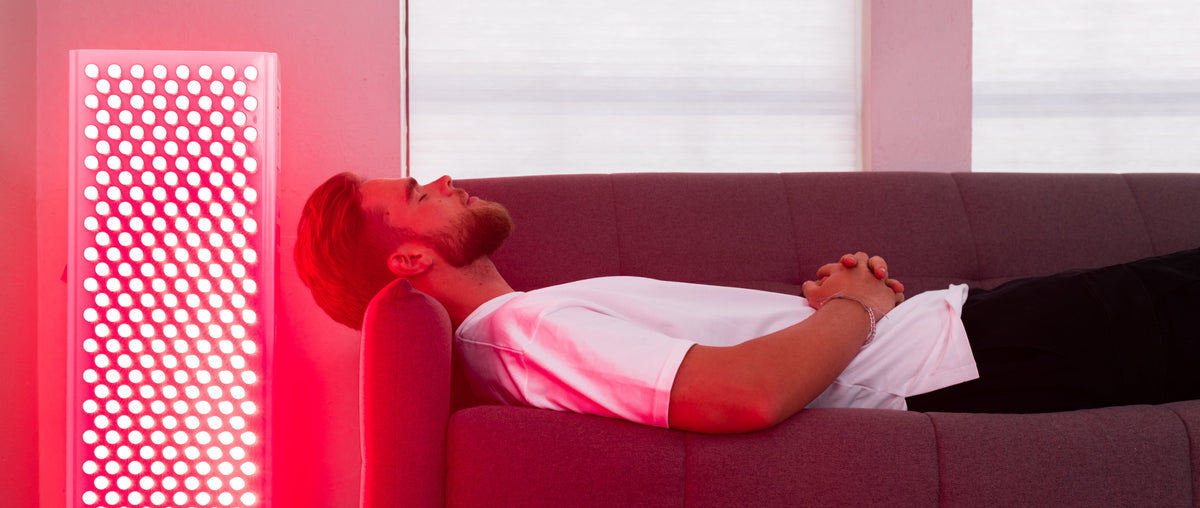
Red light and sleep are linked through timing more than through any special property of the light. Light is the main signal your body clock uses to decide when it is day, and short-wavelength blue light in the evening is the signal that pushes bedtime later and dampens melatonin. Red light at the far end of the visible spectrum has much less of that effect, which is why evening red light has a reputation as sleep-friendly. Whether a red light therapy device does anything beyond that is a smaller and younger question. This guide separates the two: the well-established light-and-clock biology, the handful of studies on red light devices and sleep, and how to run evening sessions so they do not backfire.
How light sets your body clock
Behind the eyes sit cells that do not form images at all. They measure overall light and report it to the suprachiasmatic nucleus, the brain's master clock. Those cells are most sensitive to blue light around 480 nm, the color of a clear sky and of most screens. Bright, blue-rich light in the morning anchors the clock to the day; the same light in the evening tells it the day is still running, delays the release of melatonin, and pushes the whole schedule later. This is the best-established part of the whole topic, and it is the reason dim, warm light after sunset is standard sleep advice.
Red light, 620 to 700 nm, sits at the opposite end of the visible range from the wavelengths those clock cells respond to most. At the brightness of a bedside lamp, red light has a far smaller effect on melatonin than white or blue light of the same brightness. That is the honest basis for "red light before bed": not that red light makes you sleepy, but that it is the color least likely to keep you awake.
Does red light therapy help you sleep?
The careful answer: the evidence is small and specific. The study most often cited is from 2012, in which 20 female basketball players received 30 minutes of whole-body red light each night for 14 nights; the group reported better sleep quality scores and showed higher serum melatonin than a placebo group. It is a single small trial in athletes, and it has not been replicated at scale. A few other studies have looked at red or near infrared light and measures of recovery or alertness with mixed results, and some found that bright red light in the evening can be alerting, which matters for how you use a panel at night.
So there are two things to hold at once. Red light is the safest color to have on in the evening, with solid clock biology behind it. Red light therapy as a sleep intervention has a promising but thin research base. Nothing here treats a sleep disorder, and no device on this site is sold for that purpose.
Where a red light device fits in an evening
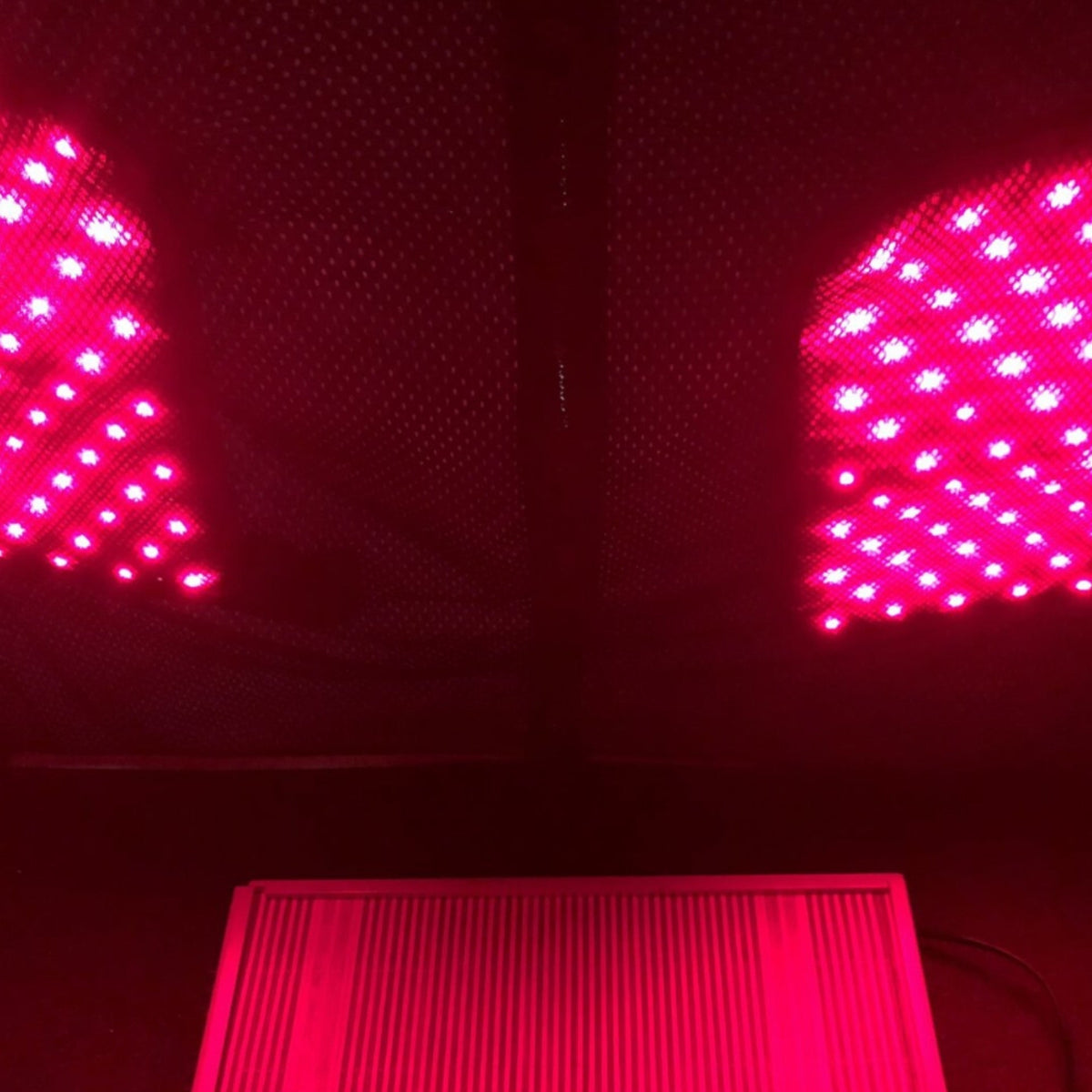
A session earns its place in an evening routine on two grounds: it is a fixed, unhurried 10 to 20 minutes that marks the end of the day, and it runs in the one color that leaves your clock alone. The mistakes are practical. A full-body panel at full brightness is a very bright light source, and staring at 300 LEDs at 10 pm is not the same as reading under a warm lamp. Timing, brightness, and where the light lands decide whether the session helps the wind-down or fights it.
- Run it an hour or two before bed, not in the final minutes. That leaves time for the brightness to fade from your system and keeps the session from becoming the last bright thing you see.
- Turn the brightness down. Panels with 1 to 100 percent brightness control were built for this. Half output over a slightly longer session delivers a similar dose with far less glare.
- Use a near infrared only mode if the device has one. 810 to 850 nm near infrared is invisible; a panel switched to near infrared only delivers its dose to tissue without lighting the room. Most Mito Red Light panels offer red, near infrared, or both.
- Eyes closed or covered, and no phone. The point of the session is to remove screens, not to add one.
- Keep the room otherwise dim and warm. The panel is the exception to a dark evening, not a reason to leave the lights on.
Morning versus evening
There is a case for the opposite schedule. Some people find any bright session alerting and prefer red light in the morning, when alertness is the goal and the clock benefits from bright light anyway. Neither schedule is wrong. The rule is to notice: if an evening session leaves you wired, move it earlier or to the morning. If a morning session is the one you actually keep, that consistency is worth more than a theoretical evening advantage.
Devices built with evenings in mind
Specs as published by each manufacturer. Prices as of September 2026; the product page is the source of truth.
| Device | Format | Evening-friendly feature | From |
|---|---|---|---|
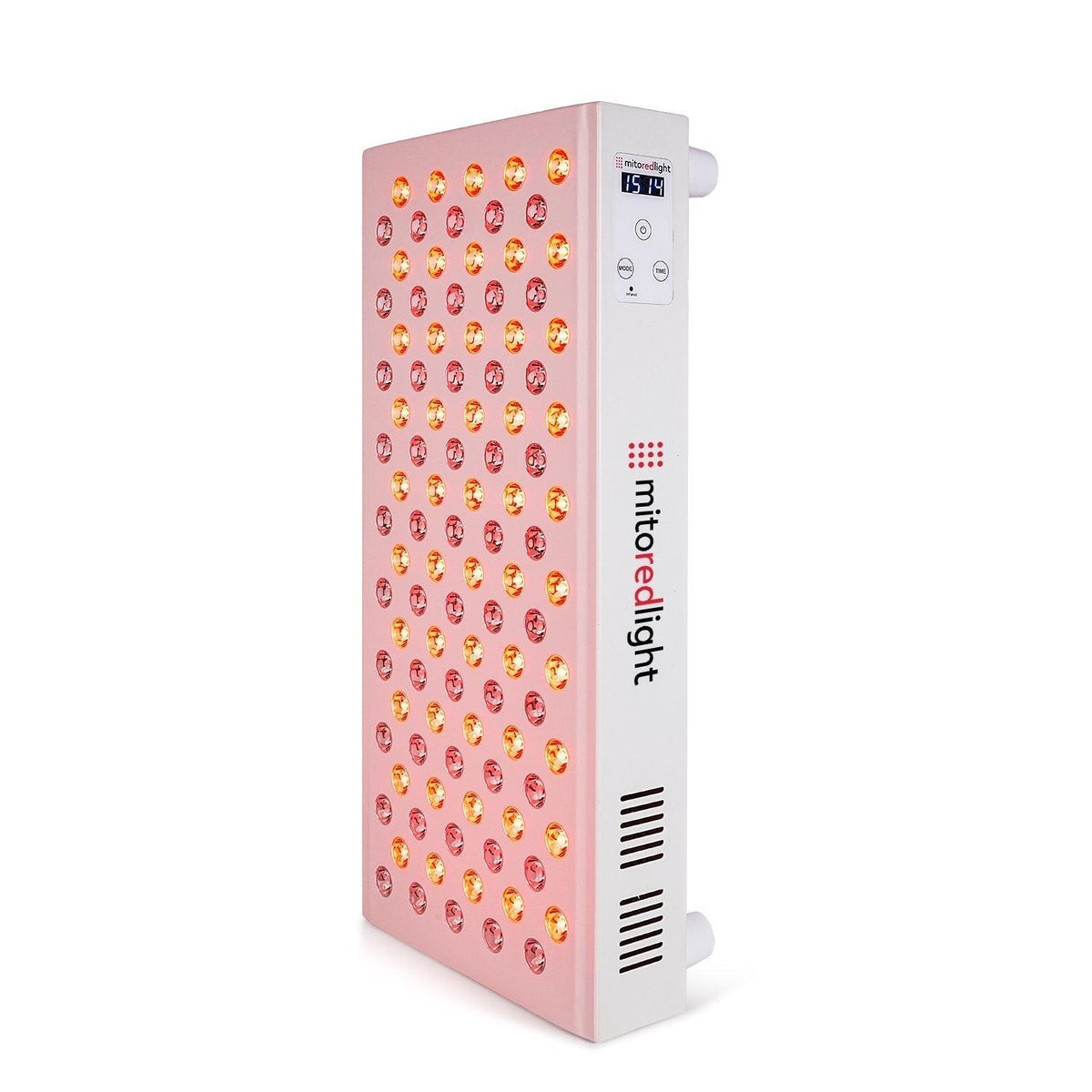
| MitoPRO+ panels | Modular panels, 60 to 300 LEDs | Red, near infrared, or both; near infrared only runs dark | $369 |
| MitoPOD wrap | Full-body wrap, 62 by 54 in | Brightness 1 to 100 percent, light stays inside the wrap, 1 to 20 minute timer | $1,699 |
| BioLight ReCharge | Tabletop panel, 60 dual-chip diodes | Brightness 1 to 100 percent, tilting stand aims it away from the eyes, flicker measured at 1.2 percent | $999 |
| NeuroVIZR Rouge | 670 nm red light and sound sessions, eyes closed | 30 of its 243 sessions were built for the red light, in a wind-down library | $869 |
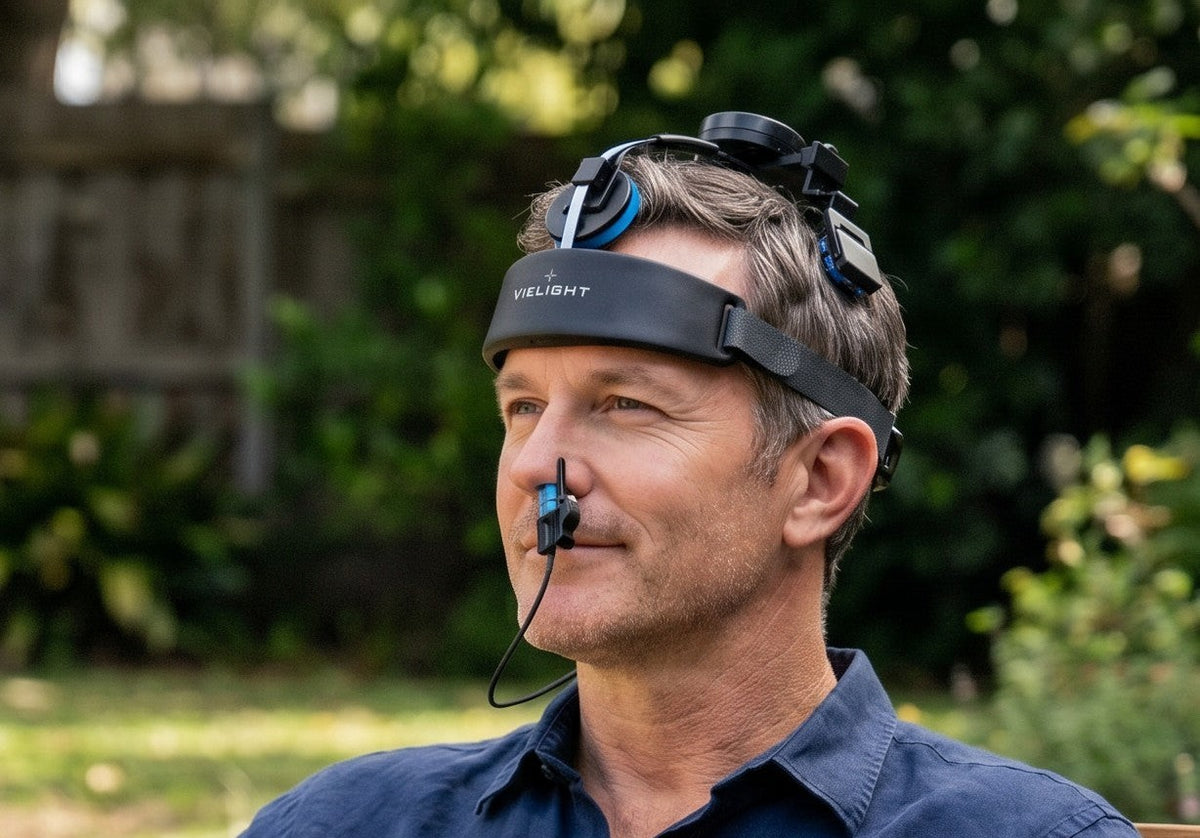
| MitoMIND helmet | 810 nm near infrared head device, 256 LEDs | Invisible light, zero flicker, a preset named Sleep among its six | $2,199 |
Two of these are not panels at all. The Rouge is a light and sound device that plays 670 nm red light through closed eyelids with a matched soundscape; it belongs in the evening because of what the session is, not because of dose to skin, and it carries the absolute seizure warning every flashing-light device does. The MitoMIND delivers invisible near infrared to the scalp and simply has a program named for the hour. For a panel, the features that matter are brightness control and a near infrared only mode; the rest of the buying decision is the same as any other time of day, covered in the panel buyer's guide and red light therapy at home.
What red light will not do for sleep
- It will not cancel a bright phone in bed. The screen is the stronger clock signal.
- It will not fix a schedule that changes by three hours between weekdays and weekends. Consistency is the lever; light is the fine adjustment.
- It will not treat a sleep disorder. Persistent trouble sleeping is a clinician's question. Kove does not provide medical advice; see the medical disclaimer.
- It is not a sedative. If you feel anything after a session, it is usually that you sat still for fifteen minutes with your eyes closed, which is its own argument.
Frequently asked questions
Does red light therapy help you sleep?
The clock biology is solid: red light is the visible color least likely to suppress melatonin, so it is the safest light to have on in the evening. Evidence that a red light device improves sleep is limited to a few small studies, the best known a 2012 trial in 20 athletes. Promising, not proven.
Is red light or blue light better before bed?
Red. Blue light around 480 nm is the signal your body clock reads as daytime, and it delays melatonin when it arrives in the evening. Red light at the same brightness has far less effect on the clock.
What time should I do a red light session for sleep?
An hour or two before bed, at reduced brightness, with eyes closed or covered. If evening sessions leave you alert, move them to the morning; a consistent session beats a theoretically optimal one you skip.
Can I use near infrared at night?
Yes, and it is the quieter option. 810 to 850 nm near infrared is invisible, so a panel in near infrared only mode delivers its dose without lighting the room. Eye protection still applies.
Should the room be dark during an evening session?
Dim and warm, yes. The device is the one bright source, and it should be the only one. Overhead white light during the session undoes the reason for choosing red.
Can I fall asleep during a session?
On a wrap or pod with a timer, dozing is harmless because the device switches itself off. Do not sleep in front of a panel that has no auto shut-off, and never with the light aimed at open eyes.
Does red light raise melatonin?
One small 2012 study measured higher serum melatonin after two weeks of nightly whole-body red light. That is one result in one group. The dependable effect is the absence of suppression, not a boost.
Is there a red light device made for the evening?
Not as a category. What helps is brightness control, a near infrared only mode, a timer, and light that stays contained, as in a wrap. The devices in the table above have one or more of those.
The short version
Red light is the right color for the evening because of what it does not do to your body clock. Red light therapy as a sleep aid rests on a few small studies and deserves a modest expectation. Run sessions an hour or two before bed, turn the brightness down or switch to near infrared, keep the room dim, and treat the fifteen quiet minutes as the real feature. Everything in the Red Light collection ships free in the US with the Price Beat guarantee.