
Contents
More from the Journal
PEMF Frequencies and Session Length: How People Use Them
What a PEMF frequency actually changes, where the delta-to-gamma program names come from, what the research does and does not tie to specific numbers, and how the ranges on home devices map to a day.
A PEMF frequency is simply how many times a second the magnetic field pulses, written in hertz. A 10 Hz program pulses ten times a second; a 1,000 Hz program a thousand. Home devices mostly run between 1 and 100 Hz, and their presets carry names borrowed from brainwave bands, delta for the slow ones, gamma for the fast, which is why the spec sheet reads like a sleep-lab report. This guide explains what the number actually changes, where the band names come from, what the research does and does not tie to specific frequencies, and how the programs on our devices map to a day.
What the frequency actually changes
A PEMF device induces tiny currents in tissue every time the field switches. Frequency sets how often that happens; intensity, measured in microtesla, sets how strong each pulse is; waveform sets the shape of the switch, sine being smooth and square being abrupt. The three are independent. A 5 Hz program at 200 microtesla is a gentle field pulsing slowly; a 50 Hz program at 20 microtesla is a weaker field pulsing fast. Frequency is a setting, not a dose, and it is the one home users most often over-read.
Where the brainwave names come from
EEG researchers group brain electrical rhythms by speed: delta roughly 0.5 to 4 Hz, associated with deep sleep; theta 4 to 8, drowsiness and light sleep; alpha 8 to 12, relaxed wakefulness; beta 12 to 30, active thinking; gamma above 30, focused processing. PEMF manufacturers borrowed those labels for their programs, so a "delta" program pulses at a few hertz and a "gamma" program at 40 or more. The label describes the pulse rate. It does not mean a mat under your back drives your brain into that rhythm; the entrainment effect that light and sound produce through the eyes and ears, covered in brainwave entrainment, is a different route and a different body of evidence. Treat the band names as a convenient way of saying "slow" and "fast".
What the research ties to specific frequencies
Honestly, less than the program menus suggest. The clinical PEMF literature, mostly on prescription bone-healing devices, uses specific pulse patterns chosen for those devices, often in the low tens of hertz, at intensities and protocols home mats do not replicate. Studies on low-intensity home-style devices have used a scatter of frequencies, commonly between 1 and 50 Hz, and the outcomes measured, local blood flow, reported soreness, reported relaxation, do not sort cleanly by frequency. The honest reading: the evidence supports pulsed fields as a category more than it supports any single number. The PEMF therapy guide lays out what the category can and cannot claim.
Two numbers deserve a specific word. 7.83 Hz, sold as the "Schumann resonance", is a real atmospheric frequency and a favorite of program menus; no controlled research shows it does anything a neighboring frequency does not. And "gamma" 40 Hz carries real research interest in light and sound stimulation, which does not transfer automatically to a magnetic pulse through a mat. Both are fine presets. Neither is a reason to buy.
How people actually use the range
- Low, roughly 1 to 10 Hz: evening and wind-down programs, sleep programs, the setting people use lying still before bed. Run 20 to 30 minutes, or the length of a sleep program.
- Middle, roughly 10 to 30 Hz: daytime and general programs, the after-training session, the "just run the default" choice. 10 to 20 minutes.
- High, 30 to 100 Hz and up: alert and focus-labelled programs, shorter sessions, usually daytime. Above 100 Hz you are in territory a few systems offer for specific presets rather than a range most people explore.
- Layered and shifting: some systems do not hold one frequency at all. The HAELO plays a set of 75 to 205 frequencies that shift through a 5 to 30 minute session, on the reasoning that variety beats repetition. It is a design philosophy, not a proven advantage.
The practical rule across manufacturers: pick by time of day, start on the gentlest preset, keep intensity low for the first weeks, and change one thing at a time. If a program leaves you wired at night, it was too fast for that hour; if you fall asleep in a daytime program, it was too slow. That feedback is more reliable than any chart.
The frequency ranges on the devices at Kove
Specs as published by each manufacturer. Prices as of October 2026; the product page is the source of truth.
| Device | Frequency range | Programs | Intensity and waveform | Price |
|---|---|---|---|---|
| HEALiX Revive and Revive Mini | 1 to 50 Hz, adjustable | 14 presets, with far infrared heat and 660 nm red light in the same mat | 3 gauss (300 microtesla) | $599.99 and $1,099.99 |
| TheraPro Recovery Pads | 3 to 64 Hz | 9 programs, delta through gamma plus a dynamic mix, 30-minute cycles | Sine and square waves; infrared heat, red light, and TENS built in | $597 and $999 |
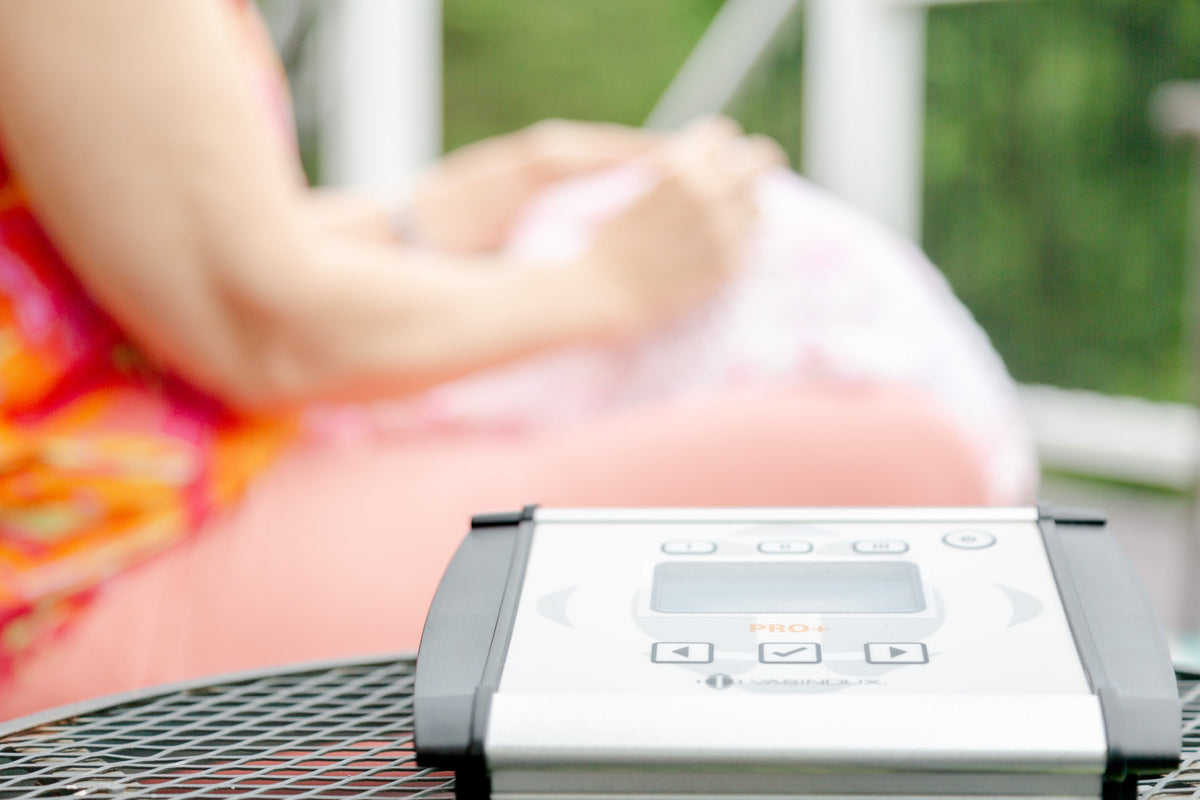
| Vasindux Pro Mat | 0.1 to 99 Hz | 12 presets | 5 to 75 microtesla, sine and square | $2,195 |
| Vasindux Pro+ Mat | 0.5 to 963 Hz presets, 0.1 to 900 Hz custom | 37 presets plus 1 custom, dual output, sleep program to 180 min | 5 to 200 microtesla, 9 levels, sine and square, reversing polarity | $2,795 |
| HAELO PEMF System | 1 to 6,000 Hz, layered | 10 frequency sets included, 75 to 205 frequencies per session, app-run | Low intensity, layered sine waves | $3,297 |
Two reading notes. The Vasindux Pro+ program categories include names such as "Bio Resonance" and "Chakra" alongside its primary PEMF presets; treat those as preset bundles with marketing names, not as separate mechanisms. And the TheraPro pads publish their PEMF strength in gauss on a different basis from the mat makers, so their figure is not comparable to the microtesla numbers above; the PEMF mat buying guide covers the unit conversions and the combination-versus-dedicated decision.
Frequency and session length
They travel together on most menus: low-frequency evening programs run long, 20 to 30 minutes or the length of a sleep program; higher-frequency daytime programs run 10 to 20. Start at the short end of whatever the preset suggests, a few sessions a week, and let the routine settle for two to four weeks before judging it. Manufacturers converge on that advice, and on the safety rules that do not change with frequency: no implanted electronic devices, clinician sign-off if pregnant or managing a serious condition, and back off if a session leaves you feeling off. Kove does not provide medical advice; see the medical disclaimer.
Frequently asked questions
What is the best PEMF frequency?
There is no single best. Low frequencies, roughly 1 to 10 Hz, are used for evening and sleep programs; 10 to 30 Hz for general daytime sessions; higher for alert programs. The research supports pulsed fields as a category more than any one number.
What PEMF frequency is used for sleep?
Programs labelled sleep run at low frequencies, typically 1 to 10 Hz, for 20 minutes to a few hours. The label reflects the pulse rate, not a proven effect; whether it suits you is something a two-week trial answers.
Is 7.83 Hz special?
It is a real atmospheric frequency and a popular preset. No controlled research shows it outperforms neighboring frequencies. Fine to use, not a reason to buy.
Does a wider frequency range make a better device?
It buys flexibility, not automatic benefit. Most people use a handful of presets between 1 and 50 Hz. Wide ranges matter to people who want to experiment.
Is a higher frequency stronger?
No. Frequency is how often the field pulses; intensity, in microtesla, is how strong it is. They are set separately.
Do PEMF frequencies entrain brainwaves like light and sound do?
Not by the same route. Light and sound entrainment works through the eyes and ears with its own evidence base. PEMF programs borrow the band names as a shorthand for slow and fast.
How long should a session be?
10 to 30 minutes for most programs, longer only for dedicated sleep programs. Start short, a few times a week.
Which preset should I start with?
The gentlest general or evening preset at low intensity. Change one variable at a time, and keep a two-line log so you can tell what did what.
The short version
Frequency is the pulse rate, not the dose. The brainwave names on the menu mean slow and fast, not sleep and focus. Use low frequencies in the evening, middle ones by day, keep intensity low to begin, and judge by how you feel over a few weeks rather than by any single number. Every system in the PEMF collection publishes its frequency range, ships free in the US, and carries the Price Beat guarantee.