
Contents
More on PEMF
PEMF Therapy Explained: How It Works and What Studies Show
What PEMF therapy is, what the research supports, how to read frequency and intensity specs without being misled, and how the mat formats compare.

PEMF stands for pulsed electromagnetic fields. A PEMF device generates brief magnetic pulses, usually between 1 and 100 Hz, that pass through the body and induce tiny electrical currents in tissue. It is a passive practice: you lie on a mat and mostly feel nothing. The research base is real but specific, and the spec that matters most, field intensity, is the one brands describe least consistently.
PEMF is the quietest category in recovery technology. No heat, no light you can see, no sensation to speak of, which makes it both easy to adopt and easy to oversell. This guide covers what the pulses do, what the evidence supports, how to read a spec sheet, and how our systems differ.
What is PEMF therapy?
A PEMF device runs current through wire coils, creating a magnetic field that switches on and off in pulses. Because the field changes rather than holding steady, it induces small electrical currents in the tissue it passes through. That is the working principle, and it is the same physics regardless of whether the device is a clinical machine or a home mat. What differs, enormously, is intensity, frequency range, and how the pulses are shaped.
It is not TENS, which pushes current through the skin with electrodes, and it is not the static magnets sold in bracelets. A changing field is the whole mechanism; a magnet that just sits there does not induce anything.
What is a PEMF mat and how does it work?
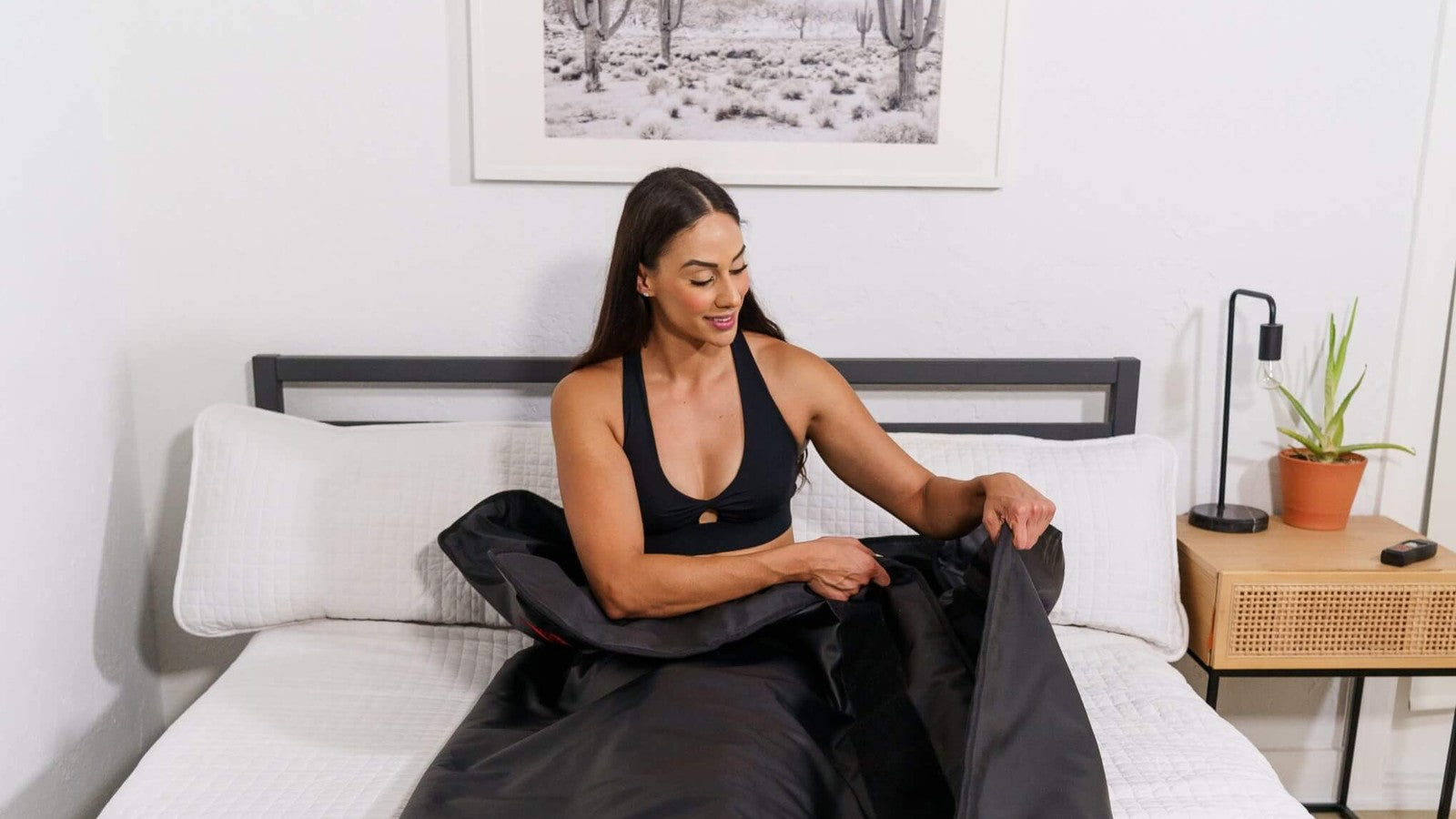
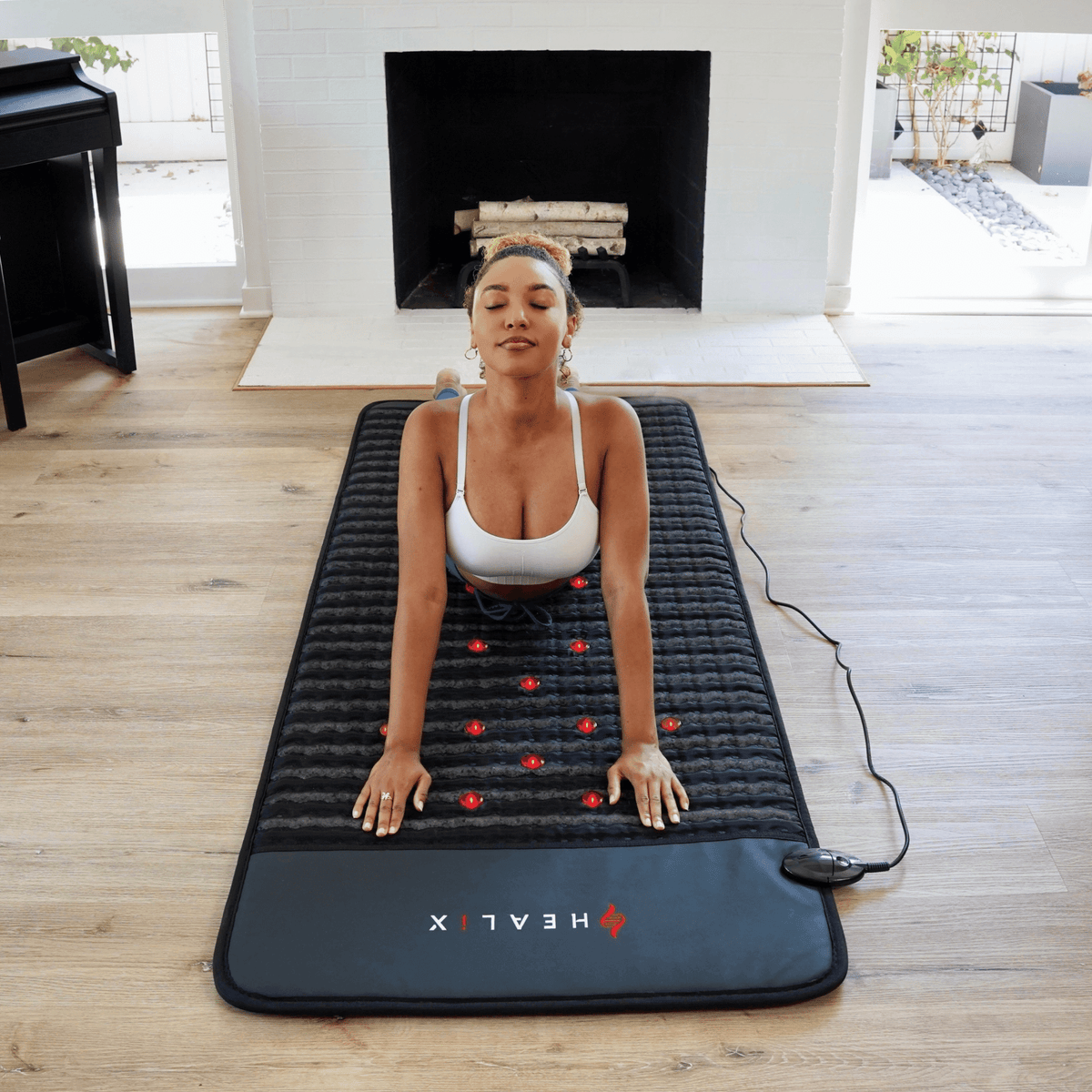
A PEMF mat is a padded mat with wire coils laid along its length, wired to a controller that sets frequency, intensity, and session time. You lie on it, pick a program, and the coils pulse a magnetic field through your body for 10 to 30 minutes. Full-length mats spread six to eight coils from shoulders to calves so the field is even; pads and rings concentrate it on one area. Nothing touches your skin electrically, and most people feel nothing during the session.
Does PEMF therapy work? What the evidence supports
Yes, within limits: the mechanism is real and the clinical history is real, but most of that history comes from prescription devices, and the evidence for home mats is narrower. Pulsed fields measurably induce currents in tissue and have decades of clinical use for specific healing applications. Home mats run far gentler, and the studies behind them are smaller. Judge it as a passive recovery practice with a plausible mechanism, not as a cure for anything.
PEMF has one of the longer clinical histories in this category, and it is worth being precise about what that history covers.
- Bone and tissue healing. The oldest and strongest research line. Prescription-grade pulsed field devices have been used clinically for decades for specific healing applications. Those are medical devices at intensities and protocols a home mat does not replicate, so this history says the mechanism is real, not that a mat does the same job.
- Circulation and muscle recovery. Studies on lower-intensity devices have measured changes in local blood flow and reported reduced muscle soreness after training.
- Relaxation and sleep routines. Low-frequency sessions are marketed heavily here. Some studies report subjective improvements; samples are small and protocols vary. Current status: promising, not proven.
What will PEMF not do?
- It will not replicate a prescription bone-healing device. Different intensity, different protocol, different regulatory category.
- It will not produce a sensation you can grade a session by. Feeling nothing is normal and says nothing about whether the field is running.
- It will not substitute for training, sleep, or the recovery basics. Like every tool in this catalog, it works on the margin.
- It is not for everyone. Anyone with a pacemaker, defibrillator, or other implanted electronic device should not use PEMF, and pregnant women should talk to their clinician first.
How to read a PEMF spec sheet
- Intensity, and the unit trap. Field strength is quoted in gauss or microtesla, and 1 gauss equals 100 microtesla. A mat listed at 3 gauss and a mat listed at 200 microtesla sound unrelated until you convert: 3 gauss is 300 microtesla. Home mats generally run from a few microtesla up to a few hundred, thousands of times gentler than clinical machines. Neither end is automatically better; intense is not the goal, appropriate is.
- Frequency range. Most home protocols live between 1 and 100 Hz, with low frequencies used in evening and sleep programs and higher ones in daytime programs. Wider ranges buy flexibility, not automatic benefit.
- Waveform. Sine and square are the common shapes. Square waves switch faster and induce more strongly for a given intensity; sine is smoother. Devices that publish waveform are telling you they thought about it.
- Coils. More coils, spread wider, mean a more even field across the body. A full-length mat with 8 coils treats the whole body at once; a ring or pad concentrates on one area.
- Programs and session length. Presets bundle frequency, intensity, and duration. What matters practically: can you run the session you want without babysitting the controller, and does the sleep program run long enough.
PEMF mats vs infrared mats
They get confused because both are mats you lie on. An infrared mat warms you; the experience is heat, and the mechanism is heat. A PEMF mat pulses a field you cannot feel. They are different tools in the same resting posture, which is why several products combine them: the HEALiX Revive combines PEMF, far-infrared heat, and red light on a single mat, while the infrared mat range covers the heat-only side. If you want one purchase that covers both mechanisms, a combination mat is the practical answer. If you want the strongest PEMF control, a dedicated system wins. Our PEMF vs infrared mat comparison walks through the trade-offs side by side.
The PEMF systems at Kove
Specs as published by each manufacturer. Prices as of August 2026; the product page is the source of truth.
| System | Type | Field strength | Frequency | From |
|---|---|---|---|---|
| HEALiX Revive Mini | PEMF + far-infrared + red light, compact mat | 3 gauss (300 microtesla) | 1 to 50 Hz, 14 presets | $599.99 |
| HEALiX Revive | PEMF + far-infrared + red light, full size | 3 gauss (300 microtesla) | 1 to 50 Hz, 14 presets | $1,099.99 |
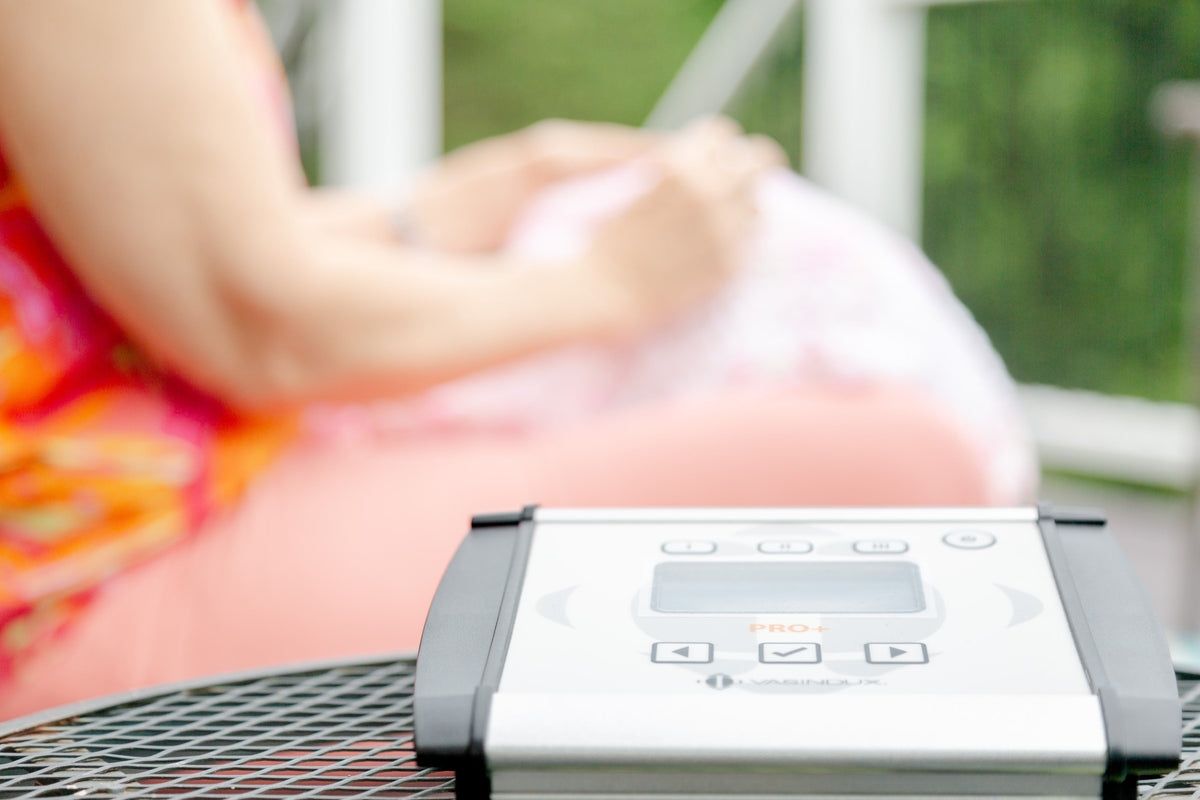
| Vasindux Pro Mat | Dedicated PEMF, controller + full body mat, 8 coils | 5 to 75 microtesla | 0.1 to 99 Hz, 12 presets | $2,195 |
| Vasindux Pro+ Mat | Dedicated PEMF, dual output, 38 programs | 5 to 200 microtesla | 0.5 to 963 Hz presets | $2,795 |
| Vasindux Pro Package | Controller + mat + chair mat + therapy ring | Up to 180 microtesla (ring) | 0.1 to 99 Hz | $2,695 |
| Vasindux Pro+ Package | Dual output controller + 3 applicators | Up to 220 microtesla (ring) | 0.5 to 963 Hz | $3,295 |
The Vasindux applicators, the full body mat, chair mat, and therapy ring, are universal across Pro and Pro+ controllers, so a system can grow without replacing the brain. Every option lives in the PEMF collection.
What is a PEMF session like?
A session, which some brands call a PEMF treatment, is simple: you lie down, pick a program, and do nothing for 10 to 30 minutes. Most people feel nothing at all; some report a faint sense of relaxation, and on combination mats the warmth is the infrared layer, not the field. The practical advice across manufacturers is consistent: start with the gentler presets a few times a week, and let the routine settle before judging it. Evening programs pair naturally with the end of the day, which is when a passive session is easiest to keep.
Is PEMF safe?
Home-intensity PEMF is generally well tolerated, with one hard rule and two soft ones. The hard rule: no implanted electronic devices, meaning pacemakers, defibrillators, insulin pumps, or similar, because a pulsed field can interfere with them. The soft rules: pregnant women and anyone managing a serious condition should ask their clinician first, and if a session leaves you feeling off, drop the intensity or frequency of use. Kove does not provide medical advice; the medical disclaimer covers where that line sits.
Can you pay with HSA or FSA?
PEMF mats are among the categories that commonly qualify with a Letter of Medical Necessity, decided per order by an independent licensed provider through Truemed at checkout. Details on the HSA and FSA page.
How does PEMF fit with other tools?
PEMF occupies the fully passive slot in a routine, which makes it the natural companion to active tools. Red light asks for exposed skin and attention to distance; cold asks for willpower; a PEMF session asks for nothing, which is exactly why it survives in routines after the novelty wears off. For the measurement side, biological age testing is how you check whether any of it is moving, and building a first stack covers sequencing.
Frequently asked questions
What does PEMF feel like?
Usually nothing. The fields in home devices are far below the threshold of sensation. Warmth on a combination mat comes from the infrared layer, not the pulses.
What is the difference between gauss and microtesla?
Units of the same thing. One gauss equals 100 microtesla, so a 3 gauss mat runs at 300 microtesla. Convert before comparing devices, because brands quote whichever unit flatters them.
Is a stronger PEMF mat better?
No. Intensity is a design choice, not a score. Clinical healing devices are intense by design; home mats are gentle by design, built for frequent passive sessions. Within the home category, control over frequency, waveform, and programs matters more than the peak number.
How often can you use a PEMF mat?
Most manufacturers design for daily use, with sessions of 10 to 30 minutes. The common pattern is starting a few times a week on gentle presets and building from there.
Can you use PEMF while sleeping?
Some systems are built for it: the Vasindux Pro+ sleep program runs up to 180 minutes. Check the program length on the product page before assuming all-night operation.
What settings should you use on a PEMF mat?
Start with the manufacturer's gentlest preset at low intensity, 10 to 20 minutes, a few times a week. Lower frequencies, roughly 1 to 10 Hz, are the evening and sleep programs; higher ones, 10 to 50 Hz, are the daytime programs. Raise intensity only after a couple of weeks at the low end, and let the preset choose the waveform.
Is PEMF good for recovery?
It is used that way. Studies on lower-intensity devices have measured changes in local blood flow and reported less soreness after training, which is why athletes run a session after hard days. The effect is a margin on top of sleep and nutrition, not a replacement for either.
Who should not use PEMF?
Anyone with a pacemaker, defibrillator, or other implanted electronic device. Pregnant women and people managing serious conditions should ask their clinician first.
PEMF or red light: which first?
Start with whichever routine you will sustain, because PEMF and red light do different jobs. Red light has the larger evidence base for skin and targeted recovery and asks for an active session. PEMF is fully passive and easiest to keep. The stack quiz sorts it in two minutes.
Do PEMF mats give off harmful EMF?
The pulsed field is the product, and home intensities sit at a tiny fraction of clinical exposure. Separately, the heating electronics in quality combination mats are shielded; the HEALiX Revive uses a zero-EMF heating layer with Faraday shielding so the only field present is the one it is pulsing on purpose.
PEMF therapy in brief
PEMF is a real mechanism with a real clinical history, sold at home in a gentler form that is best treated as a passive recovery practice. Convert the units before comparing intensity, check frequency range and program control, and decide between a combination mat and a dedicated system based on whether you want one purchase or maximum control.
Every system in the Kove PEMF collection publishes its field strength, frequency range, and warranty, with free US shipping and the Price Beat guarantee.