
Contents
More on Brain
Light and Sound Brain Devices and What the Science Says
How light and sound reach the brain: photobiomodulation, brainwave entrainment, and neurofeedback explained honestly, with the devices compared.
Home brain devices work through three mechanisms. Photobiomodulation delivers near infrared light toward brain tissue to support cellular energy. Brainwave entrainment uses pulsing light and sound to nudge brain activity toward a target rhythm. Neurofeedback measures brain activity and shows it back to you so you can train it. All three are real mechanisms with young but credible research; none is a medical treatment.
This is the most personal category in the catalog: the same session that leaves one person very relaxed leaves another unmoved. It is also the category most crowded with nonsense, which is exactly why the plain mechanics matter. This guide covers the three approaches, what the evidence supports, and how our devices differ.
Photobiomodulation: light as cellular support
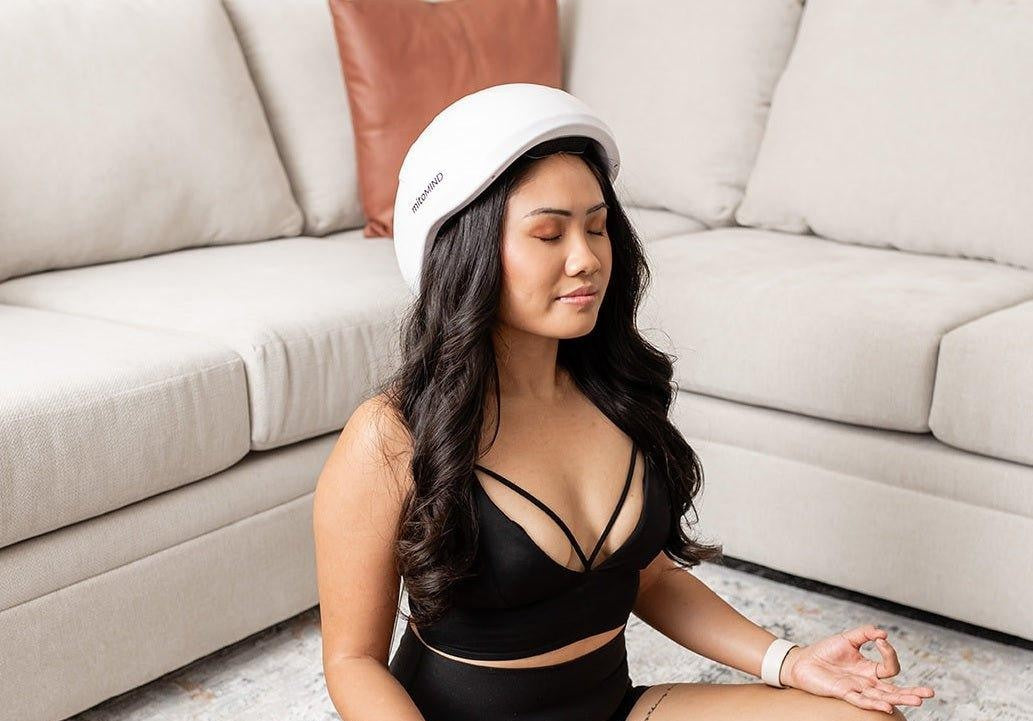
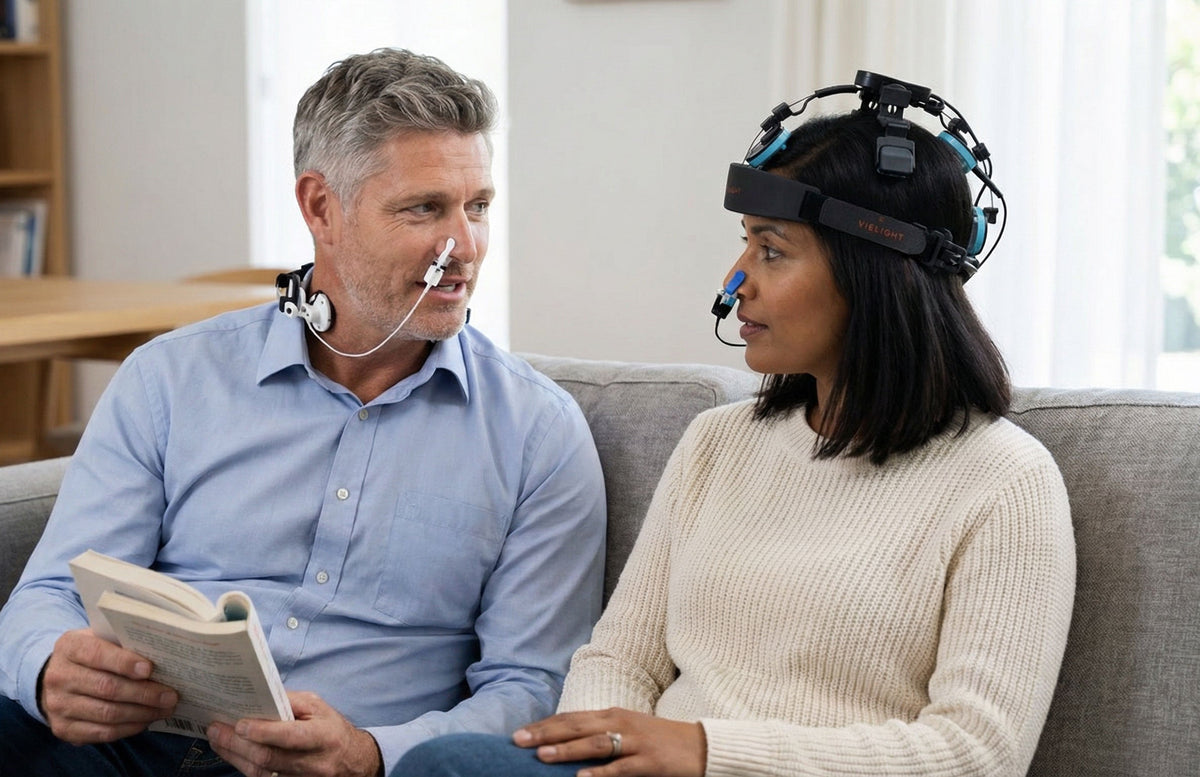
The same 810 nm near infrared range used in red light therapy penetrates further than visible light, and skull and scalp attenuate rather than fully block it. Brain photobiomodulation devices position LEDs against the scalp, and in some designs inside the nasal cavity, to deliver that light toward the cortex. The proposed mechanism is the one from the broader red light literature: absorption by cytochrome c oxidase in mitochondria, supporting cellular energy production, along with effects on local blood flow.
The research base is young and growing, with small controlled studies measuring changes in cerebral blood flow and cognitive task performance. Current status: the mechanism is plausible and the early data is interesting, and it is not settled science.
Brainwave entrainment: rhythm as input
The brain's electrical activity has rhythm, and rhythmic input tends to pull it along, a measurable effect called entrainment. Slow rhythms in the alpha range (around 10 Hz) associate with relaxed, eyes-closed states; gamma-range rhythms (around 40 Hz) associate with focused processing and are an active area of academic research. Light and sound machines pulse LEDs and layer binaural beats or isochronic tones to provide that input, with eyes closed, so the flicker arrives through the eyelids as shifting patterns.
What sessions reliably produce is a strong subjective state shift, relaxation, drift, or alertness depending on the program, which is why the experience sells itself in a way specs cannot. What remains under study is how strong and lasting the after-effects are.
Neurofeedback: measurement as training
Neurofeedback flips the direction: instead of putting signal in, it reads activity out and shows it to you in real time. The home version we offer uses fNIRS, functional near infrared spectroscopy, optical sensors reading blood flow and oxygenation in the prefrontal cortex. Focus moves a ball on a screen; losing focus drops it. Over repeated short sessions, the loop is the training: you learn what summoning attention feels like because you watch it work.
What will these devices not do?
- They will not treat, diagnose, or cure any condition, and nothing here is sold for that purpose. Clinical brain stimulation is a different world of prescription devices.
- They will not install focus or calm. They create conditions and feedback; the practice is still yours.
- Effects vary between people, more so than in any other category we offer.
- Flashing light is a real contraindication: anyone with epilepsy or a history of seizures should not use light-based entrainment devices, and that warning is absolute. Kove does not provide medical advice; see the medical disclaimer.
The devices at Kove, by mechanism
Specs as published by each manufacturer. Prices as of September 2026; the product page is the source of truth.
| Device | Mechanism | Key spec | Session | From |
|---|---|---|---|---|
| Vielight MIP | Intranasal photobiomodulation | 4 swappable applicators: 810 nm NIR (10 or 40 Hz), 633/655 nm red, 470 nm blue | 25 min | $349 |
| Vielight X-Plus 4 | Intranasal + body photobiomodulation | 633 nm nasal + 810 nm module | 20 min, auto shut-off | $449 |
| Vielight Neuro Alpha 4 | Transcranial + intranasal photobiomodulation | 810 nm, 5 modules, pulsed at 10 Hz | 20 min | $1,799 |
| Vielight Neuro Gamma 4 | Transcranial + intranasal photobiomodulation | 810 nm, 5 modules, pulsed at 40 Hz | 20 min | $1,799 |
| Vielight Neuro Duo 4 | Transcranial + intranasal photobiomodulation | 810 nm, both 10 Hz and 40 Hz modes on a single headset | 20 min | $2,399 |
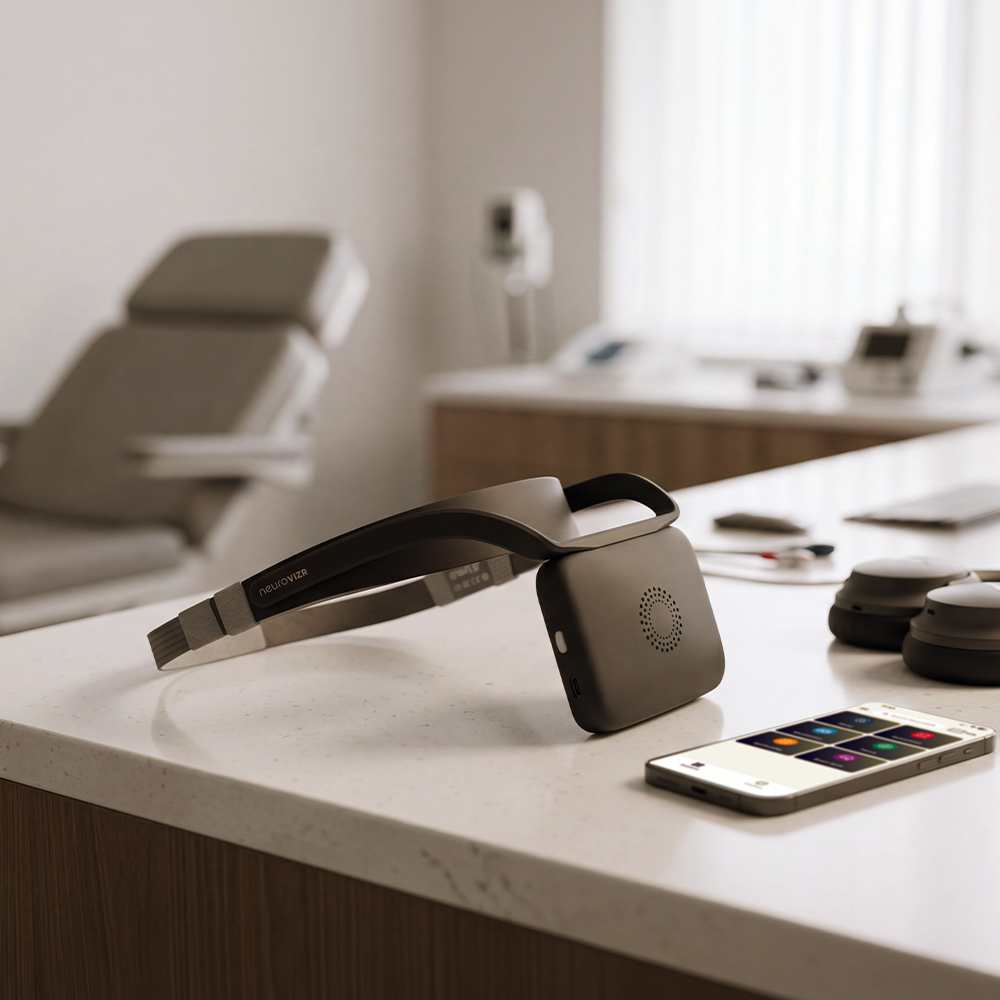
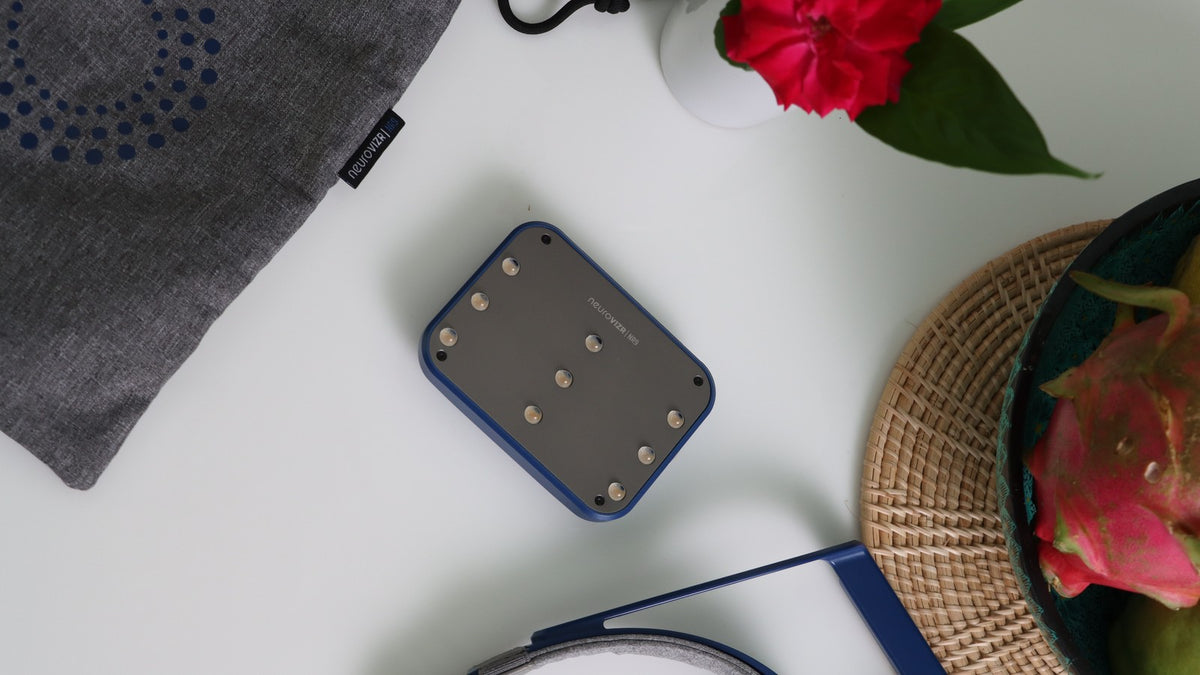
| NeuroVIZR Rouge | Light + sound entrainment, with 670 nm red light | 243 guided sessions, binaural beats + isochronic tones, free app | ~11 min | $869 |
| Mendi Headset | fNIRS neurofeedback | Prefrontal blood-flow sensing, free app, no subscription | 5 to 15 min | $295.62 |
The Vielight Neuro line is built to a medical-grade manufacturing standard (ISO 13485, MDSAP certified manufacturing, which speaks to build quality, not to treatment claims). The choice inside that line is mostly the pulse rate: Alpha for 10 Hz, Gamma for 40 Hz, Duo for both. Between mechanisms, the useful sorting question is what you want out of ten minutes: a state (entrainment), a practice (neurofeedback), or passive light delivery (photobiomodulation). For that decision made as a buyer's guide, see meditation devices compared. Everything lives in the Brain & Light collection.
What is a brain device session like?
Photobiomodulation is the quietest: a headset or nasal applicator, 20 to 25 minutes, nothing to feel, most people pair it with reading or meditation. Entrainment is the most vivid: eyes closed, headphones on, light patterns blooming through the eyelids for about 11 minutes, followed by whatever state the session was built for. Neurofeedback is the most effortful, in a useful way: short, game-like rounds of summoning focus, best in dim light, 5 to 15 minutes. Across all three, manufacturers converge on the same advice: consistent short sessions over 4 to 8 weeks, not marathon ones.
How does this fit the rest of a routine?
Brain work occupies its own slot: it is the only category here aimed at states and attention, not tissue and recovery. It pairs naturally with the passive body tools, a PEMF session or heat in the same evening, and with biological age testing as the long-run scoreboard. For sequencing a full setup, building your first stack covers the order.
Can you pay with HSA or FSA?
Brain and light devices are among the categories that can qualify with a Letter of Medical Necessity, decided per order by an independent licensed provider through Truemed at checkout. Details on the HSA and FSA page.
Frequently asked questions
What is photobiomodulation for the brain?
Brain photobiomodulation is the delivery of near infrared light, usually 810 nm, toward brain tissue through the scalp or nasal cavity, to support cellular energy production. The mechanism comes from the broader red light literature; the brain-specific research is young and growing.
What is brainwave entrainment?
Brainwave entrainment is the measurable tendency of brain rhythms to follow rhythmic input. Light and sound machines pulse at target frequencies, around 10 Hz for relaxed states and 40 Hz for alert ones, to encourage that shift for the length of a session.
Do binaural beats do anything?
They produce a perceived rhythm the brain can follow, and combined with pulsing light the entrainment effect is stronger than sound alone. The state shift during a session is reliable; the durable after-effects are the part still under study.
What is the difference between 10 Hz and 40 Hz sessions?
10 Hz sits in the alpha range associated with relaxed, eyes-closed calm. 40 Hz sits in the gamma range associated with focused processing and is an active research area. Devices like the Vielight Neuro Duo include both so you do not have to choose at purchase.
Is neurofeedback at home legitimate?
Yes: home neurofeedback is a training practice built on fNIRS sensing of prefrontal blood flow, an established measurement technique. It is exercise for attention, not therapy, and it rewards the same consistency exercise does.
How long before any of this shows something?
Entrainment states are immediate. For photobiomodulation and neurofeedback, manufacturers consistently point to 4 to 8 weeks of regular short sessions before judging.
Who should not use these devices?
Anyone with epilepsy or a seizure history should avoid flashing-light devices entirely. Anyone managing a neurological or psychiatric condition should talk to their clinician before adding any of this. These are wellness tools, not treatments.
Which brain device should a beginner try first?
A beginner should choose by budget and temperament: the Mendi if you want a trainable practice with feedback, the NeuroVIZR Rouge if you want sessions you can feel, a Vielight if you want passive light delivery you can pair with meditation. The stack quiz sorts it in two minutes.
The three approaches in brief
Three real mechanisms: light delivered to tissue, rhythm offered to the brain, and measurement turned into training. The research is younger than the body categories, the person-to-person variation is wider, and the sessions are shorter and stranger. Read the mechanism, respect the seizure warning, give it 4 to 8 weeks, and judge by your own results. Everything in the Brain & Light collection ships free in the US with the Price Beat guarantee.