
Contents
More on Brain
Mendi Headset Review: How It Works and Who It Suits
An honest look at the Mendi Headset: how fNIRS reads blood flow in the front of the brain, what a session is like, how often to train, what the research does and does not say, and who should choose something else.
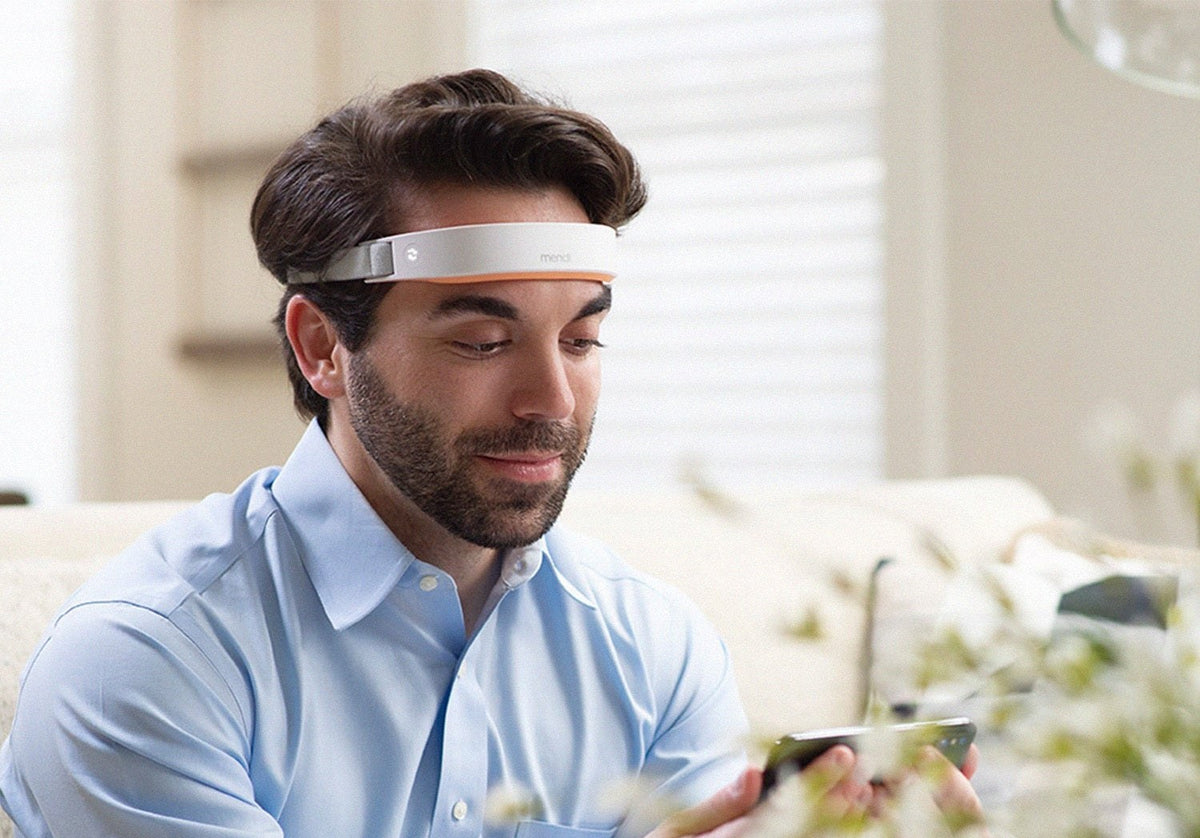
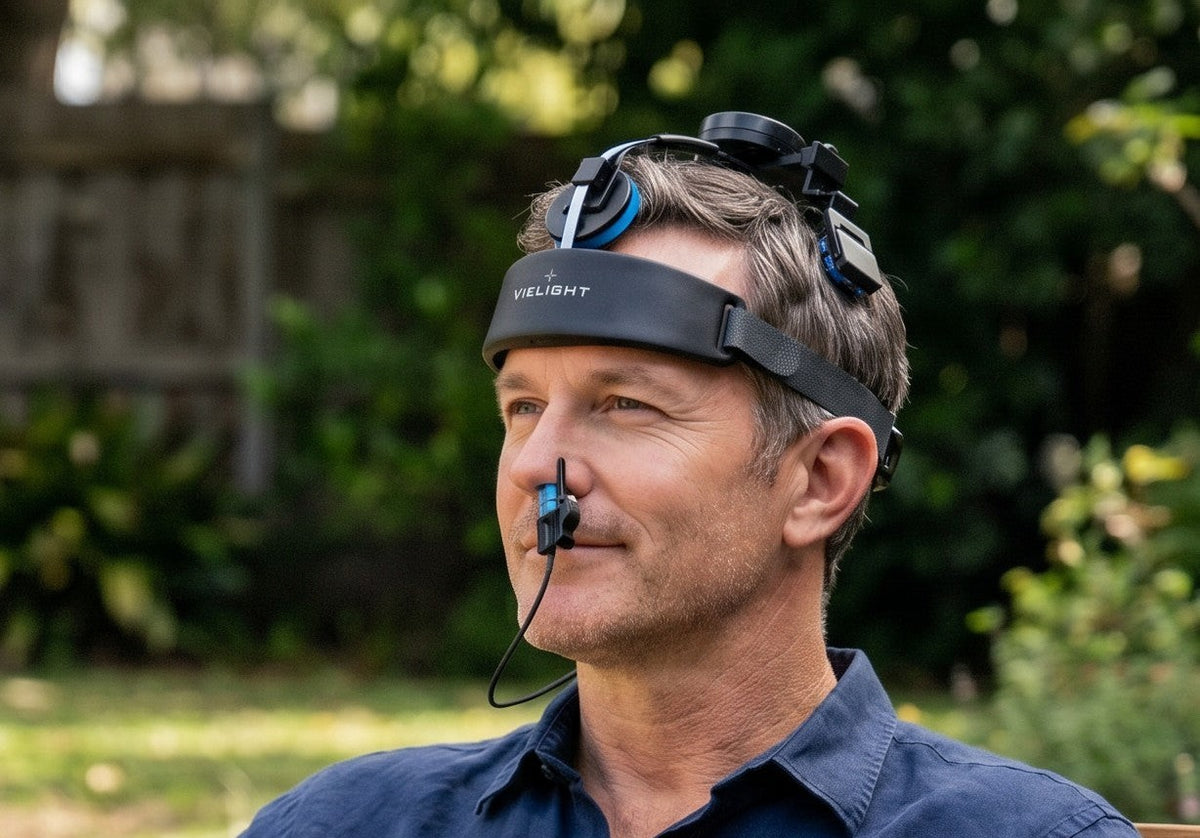
The Mendi Headset is a lightweight headband that reads blood flow in the front of your brain and turns it into a simple game on your phone: when your focus holds, a ball on the screen rises. It is neurofeedback you can do at home in a few minutes a day, with a free app and no subscription. This review covers how it works, what a session is like, how often to use it, what the research does and does not say, and who should choose something else.
The Mendi Headset at a glance
| Spec | Mendi Headset |
|---|---|
| Type | Forehead worn neurofeedback headband with a free app |
| Sensing | fNIRS: light based reading of blood flow and oxygenation in the prefrontal cortex |
| Motion sensors | Accelerometer and gyroscope |
| App | Free Mendi app for iOS and Android, no subscription |
| Connection | Bluetooth to your phone |
| Battery | Up to 5 hours, about 60 sessions per charge, USB-C |
| Session length | About 5 to 15 minutes |
| Fit | One size, rests on the forehead |
| Suitable for | Ages 5 and up; no electrical stimulation |
| Made in | Sweden |
How Mendi works
When a region of the brain works harder, blood flow to it rises to deliver more oxygen. Mendi measures that change with fNIRS, short for functional near infrared spectroscopy. Small light sources on the band shine near infrared light into the forehead, and sensors read how much comes back. Oxygenated and deoxygenated blood absorb that light differently, so the readings track activity in the prefrontal cortex, the area just behind your forehead that is tied to attention and planning.
The app turns that signal into feedback you can see. As you settle your attention, the ball climbs; when your mind wanders, it drifts down. The motion sensors watch for head movement so a fidget does not count as focus. That loop, act, see the result, adjust, is what neurofeedback means, and it is why Mendi feels more like training a skill than listening to a recording. Our guide to neurofeedback at home explains the idea in more depth.
Is Mendi an EEG headband?
No. EEG headbands read tiny electrical signals through sensors on the scalp. Mendi reads blood flow with light through the skin of the forehead. Because it sits on the forehead, hair does not get between the sensor and the skin, and there are no gels or wet electrodes. The trade off is scope: Mendi reads the front of the brain only, which is the region it is designed to train.
What a session is like
Charge the band over USB-C and pair it with the app once. After that, a session is short: rest the band on your forehead, sit somewhere with low light for the cleanest signal, choose a session, and follow the ball. Most people find the first few sessions harder than expected; the task is to stay calmly focused rather than to strain. The app keeps your scores, so you can watch your trend across weeks rather than judging any single session.
How often to use it
Mendi suggests starting with three 5 minute sessions a week, then building to four or five sessions of 10 to 15 minutes. Short and regular beats long and occasional. Treat it like any practice: the value comes from returning to it, and the app's history is how you see progress.
What the research says
fNIRS neurofeedback is an active research area. Lab studies have used prefrontal fNIRS feedback to train attention and self regulation, and the approach is well established as a way to measure prefrontal activity. Most studies are small, use lab equipment rather than consumer headbands, and measure short term changes. The honest summary: Mendi gives you a real, measurable signal to practice against, and it is a training exercise, not a treatment. It does not diagnose, treat, or prevent any condition. Kove does not provide medical advice; see the medical disclaimer.
Safety and comfort
Mendi is non invasive. It uses near infrared light for sensing only, with no electrical stimulation and no flashing lights, and the company lists it as suitable for ages 5 and up. The band is light and sits on the forehead without pressure. Anyone with a medical condition should check with a clinician before starting any new practice.
Mendi or a light and sound device?
They do different jobs. Mendi is active: eyes open, you steer the session by holding your focus. A light and sound device such as NeuroVIZR is passive: eyes closed, you sit back while a programmed session plays. Many people use an active practice for focus during the day and a passive one to wind down. Our brain, light, and sound guide and meditation devices guide compare the formats, and the brain and light collection shows every option side by side.
Who Mendi suits, and who should skip it
- Suits you if you like feedback you can see, want an active practice that takes a few minutes, and want something the whole household can use.
- Suits you if you have tried meditation apps and struggled to tell whether you were doing it right; the ball tells you.
- Skip it if you want an eyes closed, hands off experience; a light and sound device fits better.
- Skip it if you would rather not use a phone; every session runs through the app.
Frequently asked questions
Does the Mendi Headset work?
It does what it says: it measures blood flow in your prefrontal cortex and gives you live feedback to practice holding focus. How much that practice helps you depends on how consistently you use it. It is a training exercise, not a treatment.
Is Mendi worth it?
If you want a short, measurable daily focus practice with no subscription, yes. If you want a passive relaxation experience, a light and sound device is the better fit.
Does Mendi need a subscription?
No. The Mendi app for iOS and Android is free and the sessions are included.
How long is a Mendi session?
About 5 to 15 minutes. Start with 5 minute sessions three times a week and build up.
How long does the battery last?
Up to 5 hours, about 60 sessions per charge, and it charges over USB-C.
Is Mendi safe?
It is non invasive, uses light only for sensing, has no electrical stimulation and no flashing lights, and is listed for ages 5 and up.
Can kids use Mendi?
The company lists it as suitable for ages 5 and up, with the same short sessions.
Where is Mendi made?
Mendi is designed and made in Sweden.
The short version
The Mendi Headset turns focus into something you can see and practice, a few minutes at a time, using light to read blood flow in the front of the brain. No subscription, no electrodes, no stimulation. It suits anyone who wants an active, measurable focus habit at home. See it on the Mendi Headset page; it ships free in the US with the Price Beat guarantee.