
Contents
More on Red Light
Best Red Light Therapy Panels for Home Use: 2026 Buyer's Guide
Our panels sorted by the job: cheapest serious entry, half-body and full-body workhorses, the most control, the tabletop pick, and the clinic-scale unit, with lab-measured irradiance and honest comparisons.
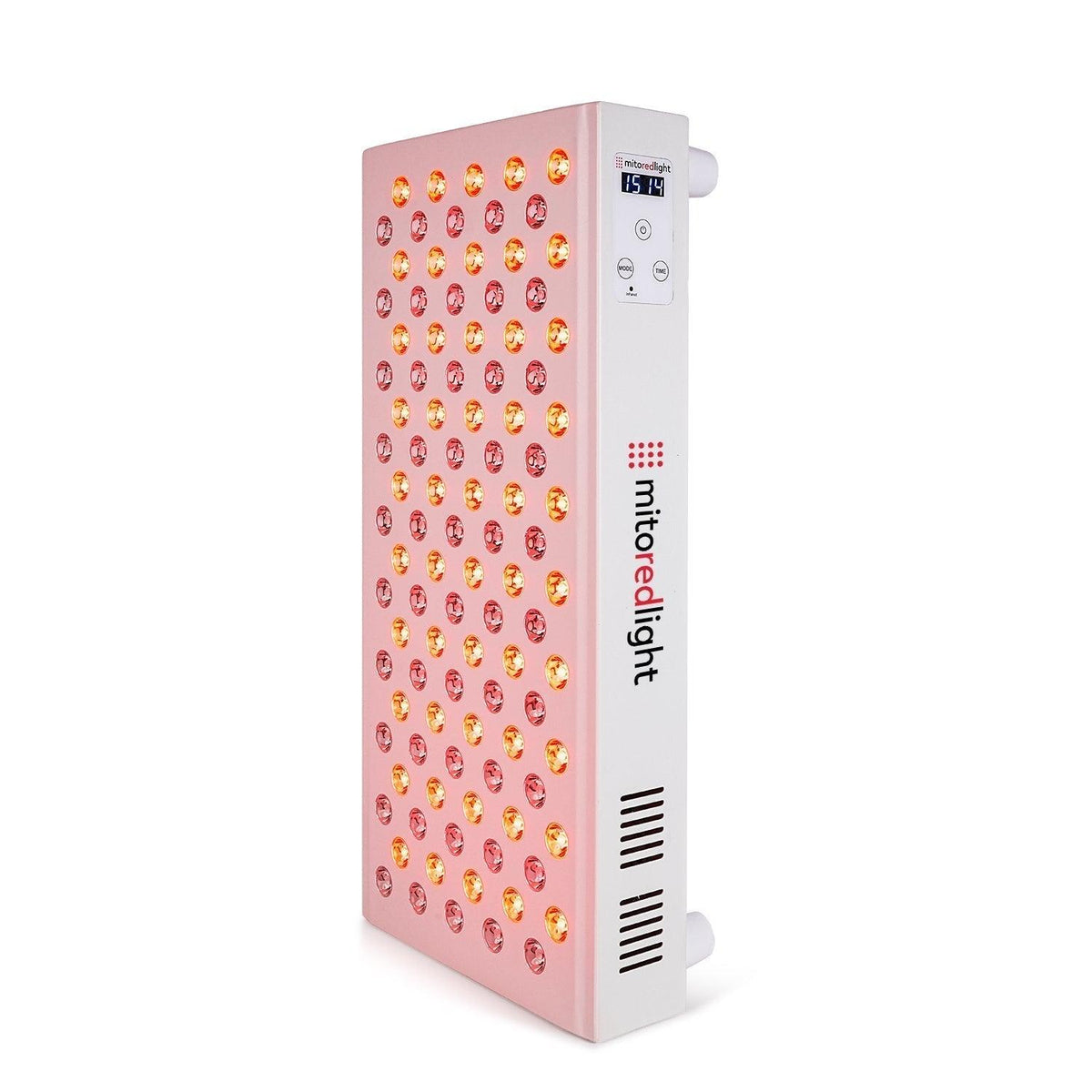
The best red light therapy panel for home use is the one whose output, coverage, and size match what you will actually do with it, and the spec sheet will not tell you that on its own. This is the buyer's guide for our panels, sorted by the job: the cheapest serious entry, the half-body and full-body workhorses, the panel with the most control, the tabletop option, and the clinic-scale unit for people who want the whole body done in ten minutes a side. Every number below is the manufacturer's published spec, and every price is as of September 2026.
How we judged them
Five things, in this order. Irradiance, measured with a lab spectroradiometer rather than a solar power meter, because the two methods disagree by a factor of two to three and only one of them is honest; Mito Red Light publishes both and we quote the lab figure. Wavelengths, which should include at least one red (630 to 660 nm) and one near infrared (810 to 850 nm) channel. Coverage, meaning the physical size of the LED field against the part of you it needs to reach. Control, meaning brightness, modes, timer, and pulsing. Build signals: flicker, EMF, certifications, and LED lifespan. Reading those numbers properly is its own guide, red light specs explained; this page assumes the reading is done and gets to the choosing.
Best entry panel: MitoPRO+ 300+
MitoPRO+ 300+, $369. Sixty LEDs across four wavelengths in equal parts, 630, 660, 830, and 850 nm, with over 60 mW/cm² at six inches on a lab spectroradiometer. A 10 by 12 inch panel at 10 lb, so it covers a face, a shoulder, or a knee at a time rather than a torso. What makes it the entry pick is that it is the small end of a modular series: the 1000+ and 1500+ use the same four-wavelength blend at 200 and 300 LEDs, and panels link into an array, so the first purchase is not wasted when you want more coverage.
Best half-body panel: MitoMID 2.0
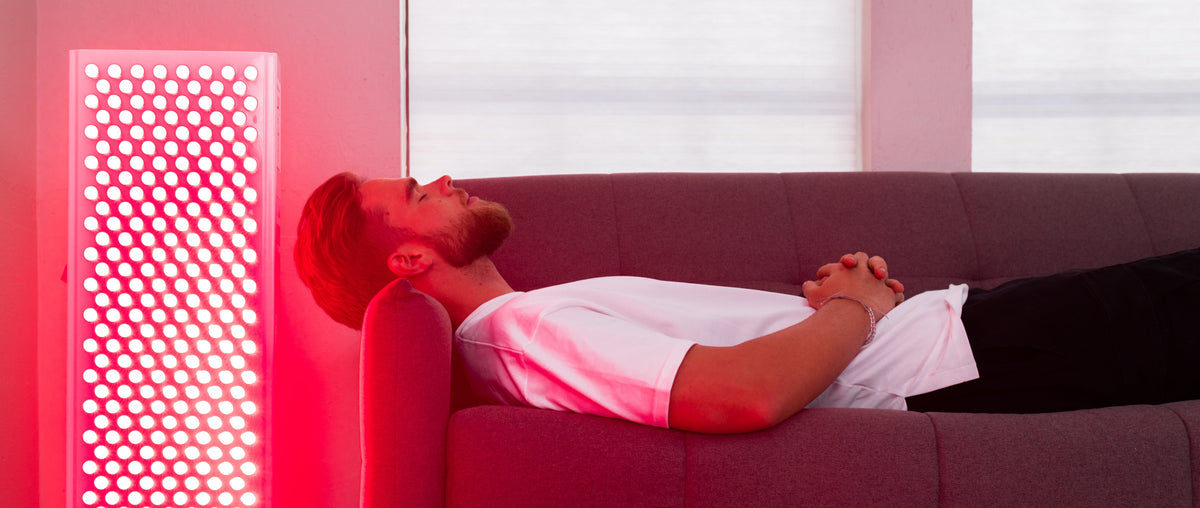
MitoMID 2.0, $449. One hundred LEDs of 660 and 850 nm, over 68 mW/cm² at six inches, in a 19 by 9 inch panel weighing 9 lb. Red, near infrared, or both, with a 1 to 20 minute timer. The half-body sweet spot: stand it on a desk or hang it on a door and it covers the upper body or the lower body in one session, which is enough for most people's actual routine.
Best full-body panels: MitoMAX 2.0 and MitoMEGA 2.0
MitoMAX 2.0, $749, is the 36 by 9 inch, 200 LED version: over 70 mW/cm² at six inches, 300 W draw, 20 lb, and independent testing that measured 68,040 joules delivered in a 10 minute session. MitoMEGA 2.0, $1,049, widens that to 36 by 12 inches and 300 LEDs, over 74 mW/cm², 450 W, 25 lb, and 106,560 joules in 10 minutes. Same 660 and 850 nm, same three modes, same 60 degree beam angle and 50,000 hour LED rating. The choice between them is width: the MEGA covers a whole torso standing at six inches without repositioning, the MAX asks you to move once. Both stand, hang, or mount.
Best control: BioLight ReStore
BioLight ReStore, $1,799. Three hundred dual-chip diodes, each able to fire 660 nm, 850 nm, or both, controlled from a built-in touchscreen with brightness from 1 to 100 percent and pulsing from 0 to 10,000 Hz. A 36 by 12 inch panel at 18 lb, shipped with a wheeled floor stand and a door-hanging kit. Its irradiance is verified by independent third-party testing, and the quality system behind it is ISO 13485 with an MDSAP audit. The reason to pay more than a MitoMEGA is control: the brightness dial makes evening sessions practical, and pulsing is there for people who want to experiment with it.
Best tabletop: BioLight ReCharge
BioLight ReCharge, $999. Sixty dual-chip diodes of 660 and 850 nm in an 11 by 8 inch panel weighing 8 lb, on a tilting stand, with the same touchscreen, 1 to 100 percent brightness, and pulsing up to 10,000 Hz as its big sibling, and flicker measured at 1.2 percent. For a desk, a bedside, or a face-and-neck routine where a floor panel is the wrong shape.
Best clinic-scale panel: BioLight ReJuvenate
BioLight ReJuvenate, $4,999. The largest panel here: 66 by 23 inches, 65 lb, 1,008 dual-chip diodes of 660 and 850 nm, 62 mW/cm² measured at six inches, and 3,000 W. About 10 minutes per side covers the whole body, standing vertically or mounted horizontally above a table on the optional mobile stand. This is the panel for a household that treats red light as a daily fixture, or for anyone who would otherwise be linking three MitoPRO+ panels and wants a single unit instead.
When a panel is the wrong shape
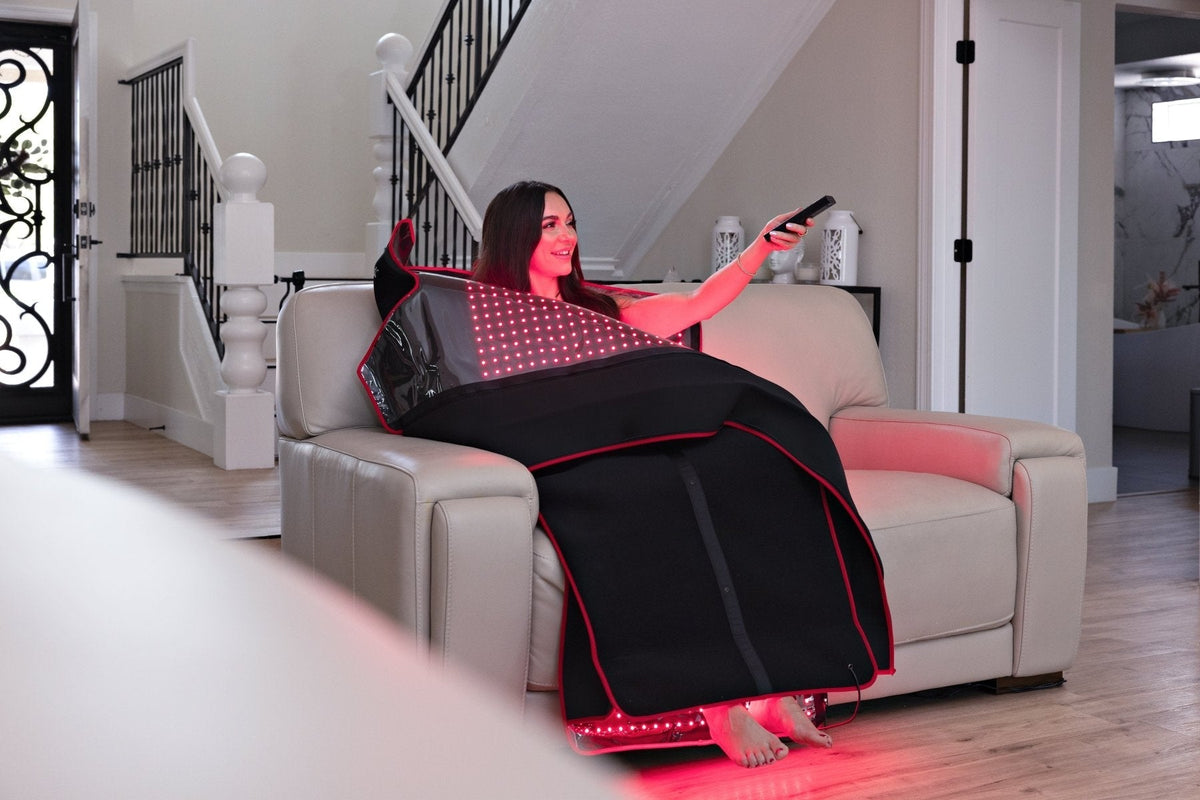
Panels light one side of you at a time from a distance. If you want to lie down and be covered, the formats change. The MitoPOD wrap, $1,699, is a flexible 62 by 54 inch neoprene wrap with 2,320 diodes that puts the light directly on the skin at 30 mW/cm², folds away, and weighs 15 lb. The HEALiX Glow Pod, $1,499.99, is a collapsible full-body pod with 2,680 bulbs of 660 and 850 nm at up to 101 mW/cm² at the surface. The BioLight Cocoon, $4,499, wraps 3,600 LEDs around front, back, and sides at once and folds flat. For the face alone, the mask question is settled in panel versus mask.
The panels compared
| Panel | LEDs | Irradiance | Size | Control | Price |
|---|---|---|---|---|---|
| MitoPRO+ 300+ | 60, four wavelengths | >60 mW/cm² at 6 in | 10 × 12 in, 10 lb | Modular, links to 1000+ and 1500+ | $369 |
| MitoMID 2.0 | 100 | >68 mW/cm² at 6 in | 19 × 9 in, 9 lb | 3 modes, 1 to 20 min timer | $449 |
| MitoMAX 2.0 | 200 | >70 mW/cm² at 6 in | 36 × 9 in, 20 lb | 3 modes, timer | $749 |
| BioLight ReCharge | 60 dual-chip | Third-party verified | 11 × 8 in, 8 lb | Touchscreen, 1 to 100% brightness, pulsing | $999 |
| MitoMEGA 2.0 | 300 | >74 mW/cm² at 6 in | 36 × 12 in, 25 lb | 3 modes, timer | $1,049 |
| BioLight ReStore | 300 dual-chip | Third-party verified | 36 × 12 in, 18 lb | Touchscreen, 1 to 100% brightness, 0 to 10,000 Hz | $1,799 |
| BioLight ReJuvenate | 1,008 dual-chip | 62 mW/cm² at 6 in | 66 × 23 in, 65 lb | 1 to 100% brightness, 0 to 10,000 Hz | $4,999 |
One note on the irradiance column. Mito Red Light publishes lab spectroradiometer figures at six inches; BioLight publishes third-party verified output for its panels and a six-inch figure for the ReJuvenate. Where the measurement method is not identical, the numbers are not directly comparable, which is the single most useful thing to know when reading any panel spec sheet.
Which one, in one line each
- First panel, tight budget, one area at a time: MitoPRO+ 300+.
- Desk or door, upper body most days: MitoMID 2.0.
- Full body, best output per dollar: MitoMAX 2.0, or MitoMEGA 2.0 if you would rather not reposition.
- Evening sessions and settings you can dial: BioLight ReStore.
- Bedside or face and neck: BioLight ReCharge.
- Whole body in ten minutes a side, one unit: BioLight ReJuvenate.
Every panel on this page is among the categories that can qualify for HSA and FSA payment with a Letter of Medical Necessity, decided per order through Truemed at checkout; the saving is worked through in is red light therapy HSA or FSA eligible. Setup, distance, and session length for whichever panel you choose are in red light therapy at home, and the evidence behind the category is in what the research actually says.
Frequently asked questions
What is the best red light therapy panel for home use?
For most people, a half-body or full-body panel with lab-measured irradiance above 60 mW/cm² at six inches and both red and near infrared channels: the MitoMID 2.0 at $449 or MitoMAX 2.0 at $749. Pay more for brightness control and pulsing (BioLight ReStore) or for clinic-scale coverage (ReJuvenate).
How many LEDs do I need?
Fewer than the marketing suggests. LED count tracks panel size, not quality; a 60 LED panel and a 300 LED panel from the same series deliver similar irradiance, the larger one simply covers more of you. Match LED count to the area you want to treat.
Is a more expensive panel stronger?
Not necessarily. Within this list, irradiance ranges from about 60 to 74 mW/cm² regardless of price. The price buys size, control features, build certification, and coverage, not raw output.
Do I need pulsing?
No. Pulsed light is an area of research with no settled home protocol. It is a feature to experiment with on the BioLight panels, not a reason to reject the Mito panels that run continuous.
Panel or wrap?
Panels for standing or seated sessions aimed at one side; wraps and pods for lying down and being covered. Output per square centimeter is usually higher on a panel; convenience and consistency usually win on a wrap.
Which wavelengths should a panel have?
At least one red channel, 630 or 660 nm, and one near infrared, 810 to 850 nm. All seven panels here have both; the MitoPRO+ series carries four.
How long do the LEDs last?
Mito rates its panel LEDs at 50,000 or more hours. At 15 minutes a day that is over 500 years, so lifespan is not a deciding factor; build quality and warranty are.
Can I pay with HSA or FSA?
Red light panels are among the categories that can qualify with a Letter of Medical Necessity, decided per order by an independent licensed provider through Truemed at checkout. Details on the HSA and FSA page.
The short version
Buy by the job. MitoPRO+ 300+ to start small and grow, MitoMID 2.0 for a half-body routine, MitoMAX or MitoMEGA 2.0 for full-body output per dollar, BioLight ReStore for brightness and pulsing control, ReCharge for the tabletop, ReJuvenate when you want the whole body done in one unit. Compare irradiance only when the measurement method matches. Everything in the Red Light collection ships free in the US with the Price Beat guarantee.