
Contents
More on Red Light
MitoPRO+ Review: Sizes, Wavelengths, and Which Panel to Pick (2026)
A close look at the MitoPRO+ red light panel series: the 300+, 1000+ and 1500+ compared on size, LEDs, irradiance and price, what the four wavelengths do, how to set up and use a panel, and who should choose something else.
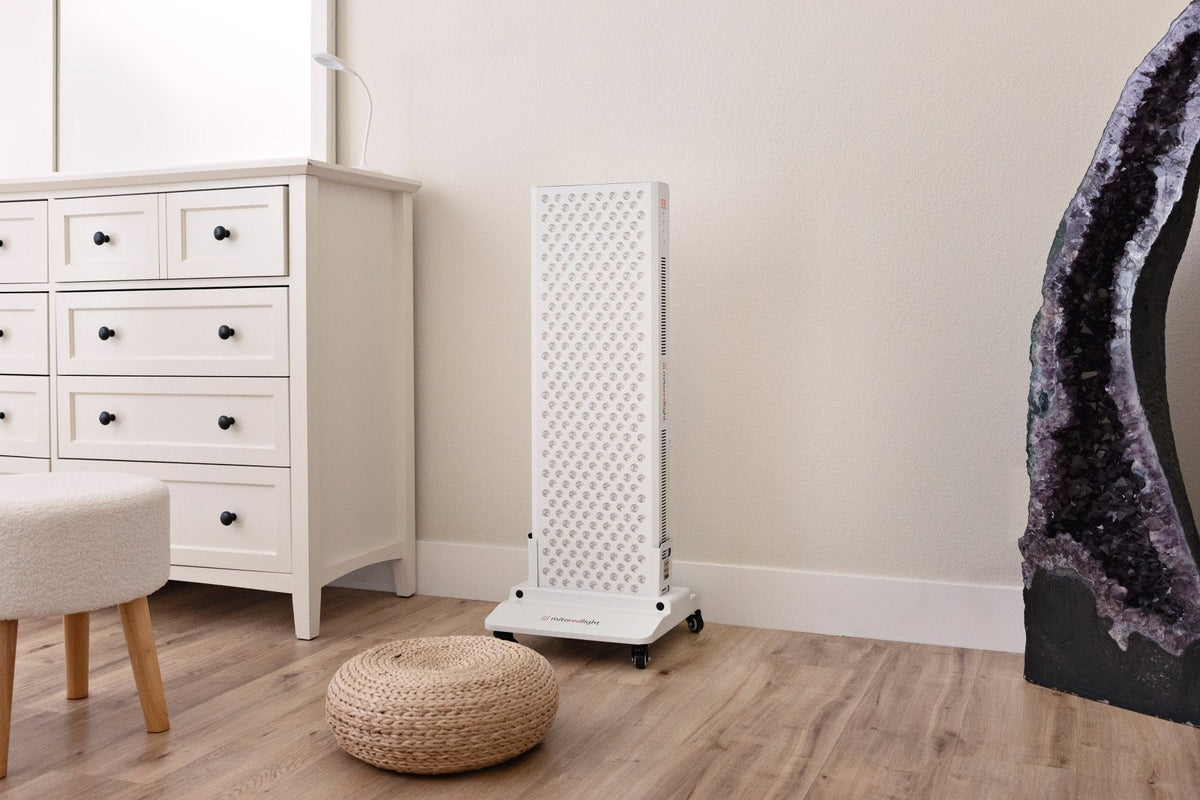
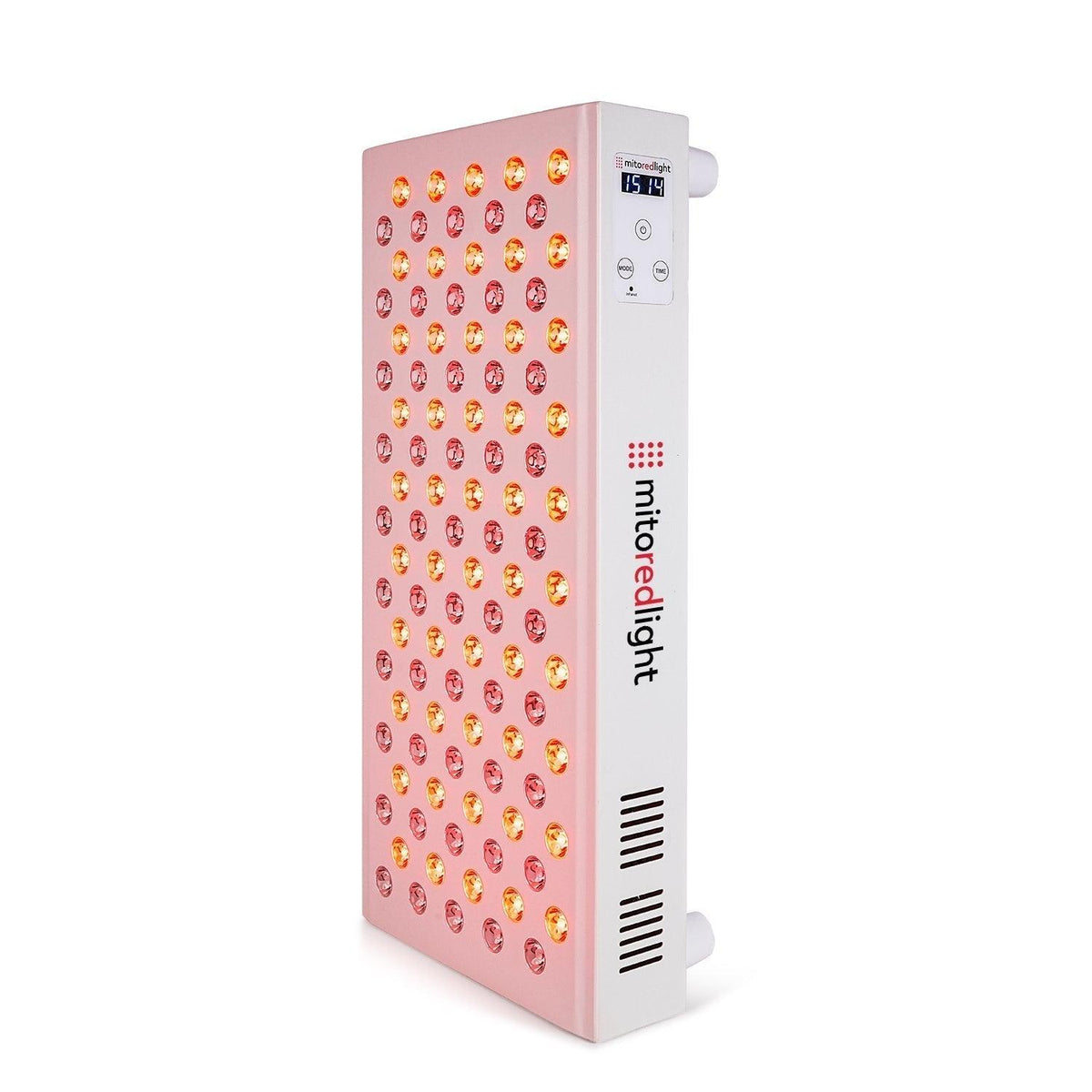
The MitoPRO+ is a series of red light therapy panels from Mito Red Light that splits its LEDs evenly across four wavelengths: 630, 660, 830, and 850 nm. At Kove it starts at $369 for the 300+ face and neck panel and runs to $4,276 for a four panel array, with the 1000+ at $869 and the 1500+ at $1,169 in between. It suits people who want to start with a single panel and add coverage later. Pick by the area you want to light: the 300+ for face and neck, the 1000+ for an upper or lower body zone, and the 1500+ for the single panel that comes closest to full body.
The three MitoPRO+ sizes at a glance
| Spec | MitoPRO 300+ | MitoPRO 1000+ | MitoPRO 1500+ |
|---|---|---|---|
| Price | $369 | $869 | $1,169 |
| Covers | Face and neck | Upper or lower body | Close to full body |
| Panel size | 10 × 12 in | 12 × 24 in | 12 × 36 in |
| LEDs | 60 | 200 | 300 |
| Irradiance at 6 in, lab spectroradiometer | More than 130 mW/cm² | More than 165 mW/cm² | More than 170 mW/cm² |
| Irradiance at 6 in, consumer light meter | About 60 | About 66 | About 68 |
| Power draw | 90 W | 270 W | 375 W |
| Weight | 10 lb | 17 lb | 22 lb |
| Mounting in the box | Tabletop stand, plus door hanging hardware | Door hanging hardware | Door hanging hardware |
List prices are as of November 2026; a promotion may be running, and the MitoPRO+ product page is the source of truth. Sizes are panel only, and a stand adds about 6 to 8 inches of height.
The rest is shared. Each panel has three modes with a built in timer, is low EMF and flicker free, and has ETL, BSCI, and ISO 9001/14001 certifications with third party testing. The box holds a remote, power cable, user manual, opaque goggles, Mito Red IR3 glasses, an over the door hook, steel cables, and four vinyl straps. There's no app control. The bigger panels also cost less per LED: about $6.15 on the 300+, $4.35 on the 1000+, and $3.90 on the 1500+.
Four wavelengths, 25% each
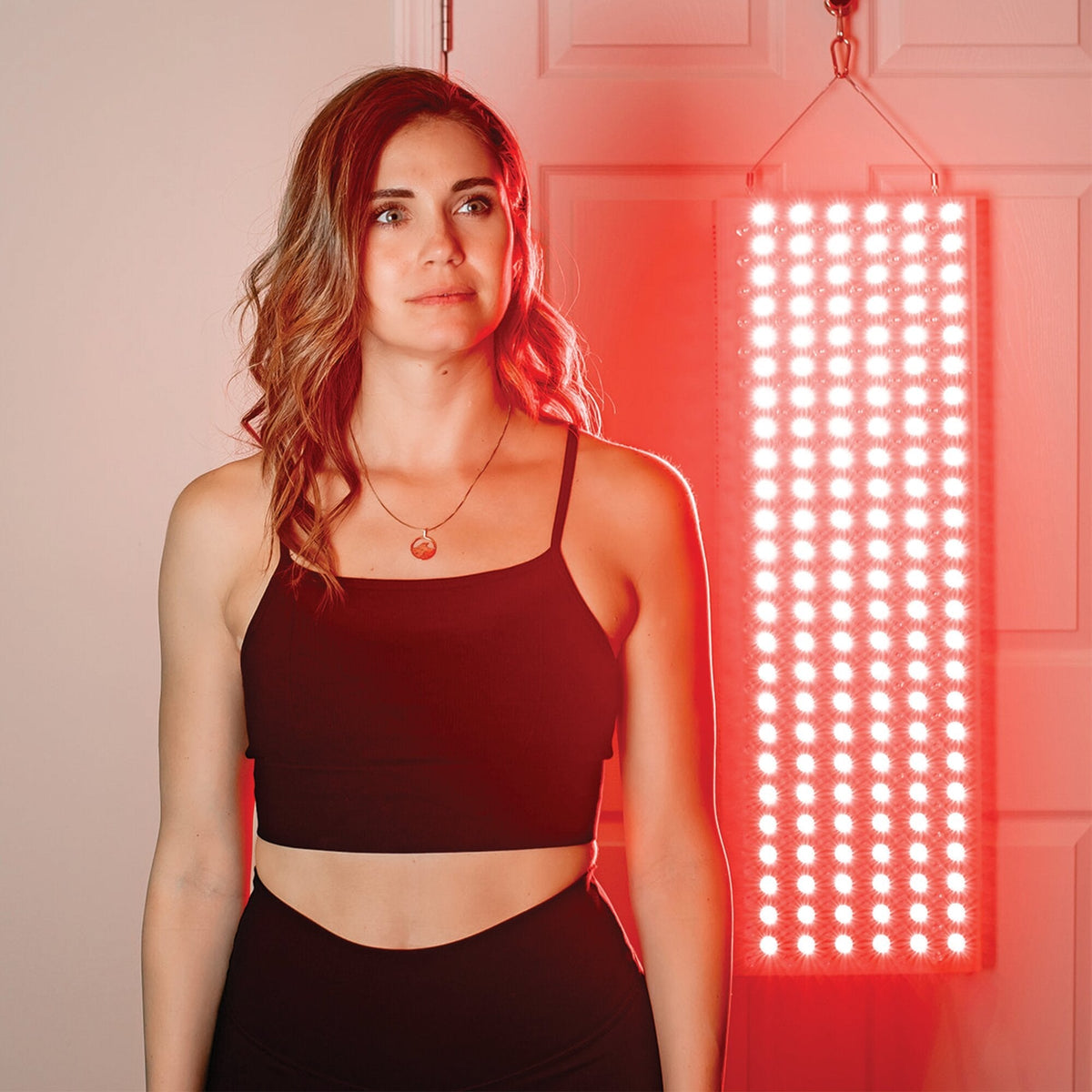
Most panels run two wavelengths. The MitoPRO+ blends four in equal parts: 630 and 660 nm red, plus 830 and 850 nm near infrared. Red light at 630 and 660 nm is absorbed mostly at the skin. Near infrared at 830 and 850 nm passes further in, toward muscle and joint tissue. Mito chose the four to better match the absorption peaks of cytochrome c oxidase, an enzyme involved in cellular energy production. Light supports normal cellular processes; it doesn't treat or cure any condition.
Mito publishes two sets of irradiance figures. The higher numbers come from a laboratory spectroradiometer. A consumer light meter reads about 60, 66, and 68 on the same three panels, which is the figure most other makers quote, so compare like with like. Our guide to red light specs explains how to read these numbers.
Which size to pick
Face or spot use: the 300+ ($369). At 10 by 12 inches and 10 pounds, it arrives with its tabletop stand attached, so setup is pulling each side outward and setting it on a level surface. If you're weighing a panel against a wearable for the face, see red light panel vs mask.
Half body: the 1000+ ($869). With 200 LEDs on a 12 by 24 inch panel, it covers an upper or lower body zone per session. It hangs on a door with the hardware in the box, so you don't need a stand to start.
Full body: the 1500+ ($1,169). At 12 by 36 inches with 300 LEDs, it comes close to full body from a single panel, and it has the highest lab irradiance of the three. If body coverage is the goal and the budget allows, this is the size we'd pick.
Not sure how far you'll take red light yet? Mito's own advice is to start with one panel and add more later.
Arrays: linking panels for more coverage
MitoPRO+ panels link into an array of several panels. Kove lists four ready made sets, and each costs less than buying the same panels one at a time.
| Set | Use | Size | LEDs | Price | Savings vs single panels |
|---|---|---|---|---|---|
| 1000+ and 1500+ | Full body array | 12 × 60 in | 500 | $1,938 | $100 |
| 2x 1500+ | Largest full body | 12 × 72 in | 600 | $2,238 | $100 |
| 2x 1000+ and 1500+ | Double full body | 24 × 60 in | 1,000 | $3,676 | $400 |
| 4x 1500+ | Commercial or studio | 24 × 72 in | 1,200 | $4,276 | $400 |
Every array measures more than 170 mW/cm² at 6 inches on the lab spectroradiometer. Orders of two or more panels ship with door hanging brackets that join the panels, packed separately. Our best red light panels guide compares other formats.
Setup, stands, and outlets
For a single 1000+ or 1500+ on the floor, Mito's height adjustable Floor Stand V2 fits. For two or more panels, the Universal Stand holds them vertical up to 100 pounds or horizontal up to 65 pounds. Four panel arrays mount vertically only, and Mito doesn't offer wall mounts.
Two panels can share one wall outlet through the daisy chain power cord included with each panel. Never chain more than two: a 4x 1500+ array runs as two pairs on two separate outlets, since the full array draws up to 1,500 W. Mito recommends plugging each panel into its own wall outlet. The remote runs linked panels together.
How to use the MitoPRO+
- Distance. Place yourself 6 to 18 inches from the panel.
- Session. Run up to about 10 minutes per area, using the built in timer.
- Frequency. Use it 4 to 6 times a week, with one day off.
- Mode. Choose red only (630 and 660 nm), near infrared only (830 and 850 nm), or both, from the control panel or the remote.
- Not in a sauna. Mito doesn't recommend it, since regular heat and humidity shorten LED life and affect output.
Our red light therapy at home guide covers building a routine.
What the research says
The product page cites three published studies. A 2014 trial in Photomedicine and Laser Surgery followed 136 adults over 30 sessions and found improved skin complexion and roughness compared with untreated controls. A 2018 review of 28 placebo controlled trials in Lasers in Medical Science found a modest edge in exercise measures when light was applied to muscle beforehand, and its authors rate the evidence as very low to moderate quality. A 2012 study in the Journal of Athletic Training gave 20 basketball players thirty minutes of whole body red light each evening for 14 nights and reported better sleep quality scores than a placebo group.
None of the three tested the MitoPRO+; they used other light sources. Read them as context, with no promise of results. Kove doesn't provide medical advice.
Who the MitoPRO+ suits, and who should skip it
- Suits you if spreading the spend over time works better for you than one large purchase up front.
- Suits you if you aren't sure how far you'll take red light yet; starting with one panel keeps the choice open.
- Suits you if more than one person at home will use it; a panel on a stand or door serves everyone without fitting or sizing.
- Skip it if you want maximum coverage from a single purchase today; the MitoMEGA 2.0 does that with a single panel.
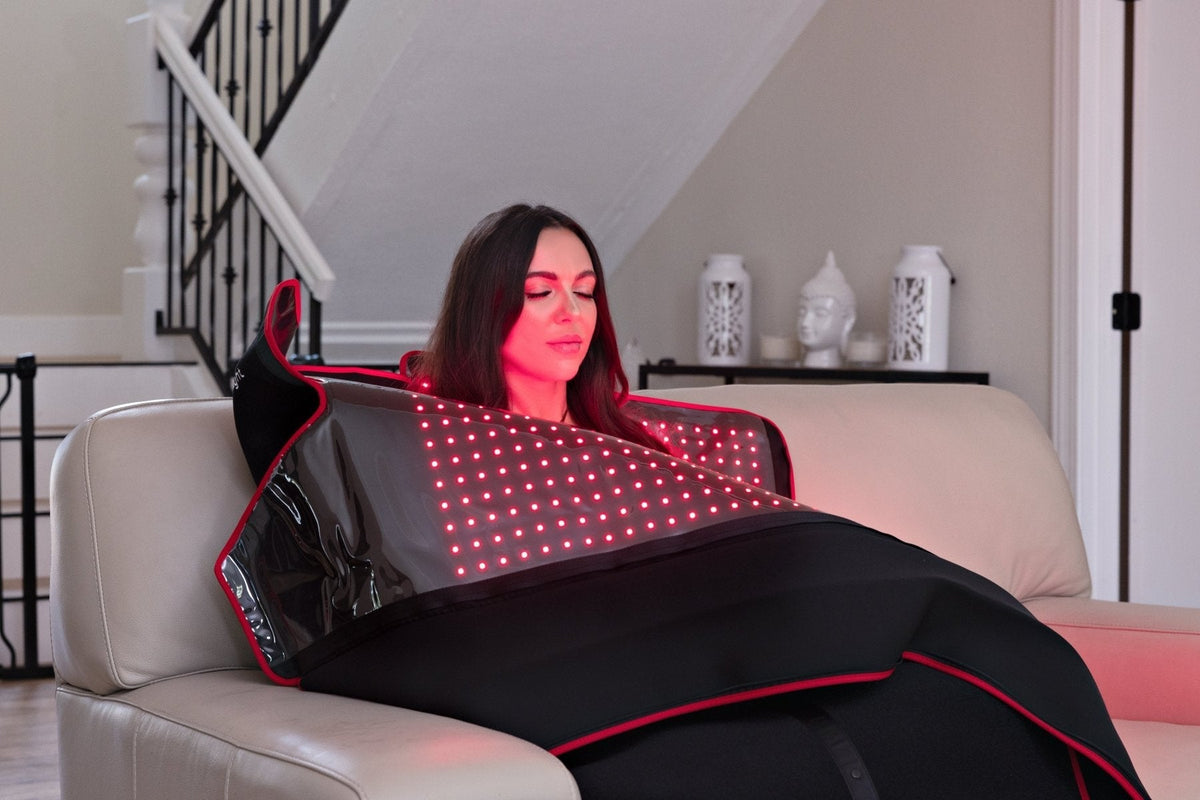
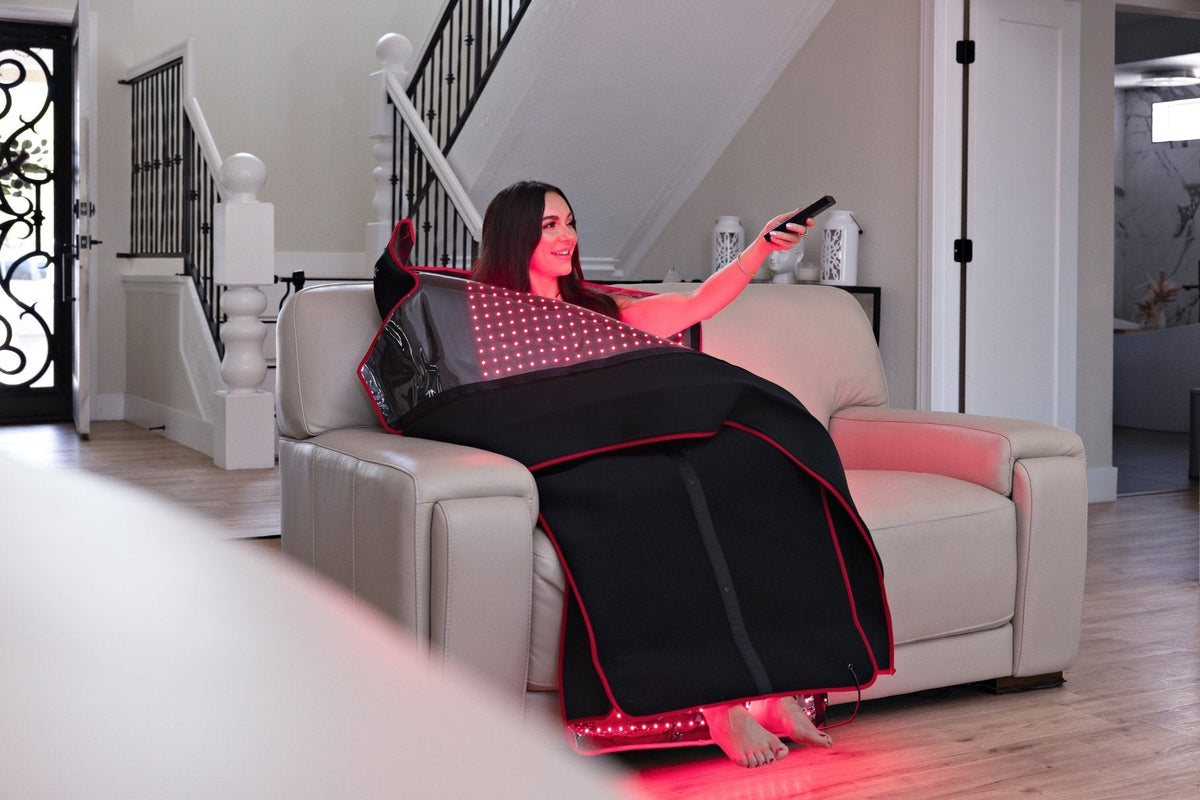
- Skip it if you prefer sessions lying down; the MitoPOD wrap fits that better, and our MitoPOD review covers it.
Shipping, returns, and warranty
The MitoPRO+ ships free in the US, leaves within 1 to 2 business days, and arrives in 3 to 7 business days. You have 60 days from delivery to send it back: our team emails a prepaid return label, there's no restocking fee, and exchanges cost nothing extra. Items need to come back in their original packaging. It comes with a 3 year limited warranty, and our team answers questions 7 days a week.
Frequently asked questions
Is the MitoPRO+ worth it?
The MitoPRO+ is worth it if you want four wavelengths and the option to grow from one panel into an array. Prices start at $369, and you have 60 days from delivery to send it back. If you want maximum coverage from a single panel today, the MitoMEGA 2.0 fits better.
What is the difference between the MitoPRO 300+, 1000+ and 1500+?
The three MitoPRO+ sizes differ in LED count and coverage. The 300+ has 60 LEDs on a 10 by 12 inch panel, the 1000+ has 200 LEDs at 12 by 24 inches, and the 1500+ has 300 LEDs at 12 by 36 inches. They cost $369, $869, and $1,169.
Is there a MitoPRO 750?
Kove lists the MitoPRO+ in three single panel sizes, the 300+, 1000+, and 1500+, and there's no 750 among them. The middle option is the 1000+ at $869, with 200 LEDs on a 12 by 24 inch panel.
How far away and how long should I use the MitoPRO+?
Place the MitoPRO+ 6 to 18 inches away and run up to about 10 minutes per area, 4 to 6 times a week with one day off. That's what Mito suggests, and the remote's Reset button returns every panel to 10 minutes.
Is the MitoPRO+ low EMF and flicker free?
Yes, the MitoPRO+ is low EMF and flicker free, and it has ETL, BSCI, and ISO 9001/14001 certifications with third party testing. Power draw is 90 W for the 300+, 270 W for the 1000+, and 375 W for the 1500+.
The MitoPRO+ verdict
The MitoPRO+ gives you four wavelengths in equal parts, three sizes from $369 to $1,169, and a path from one panel to a full array. See every size and set on the MitoPRO+ Red Light Therapy Panel Series page. It ships free in the US with the Price Beat Guarantee, and our team can help you choose between the sizes before you order your panel.